


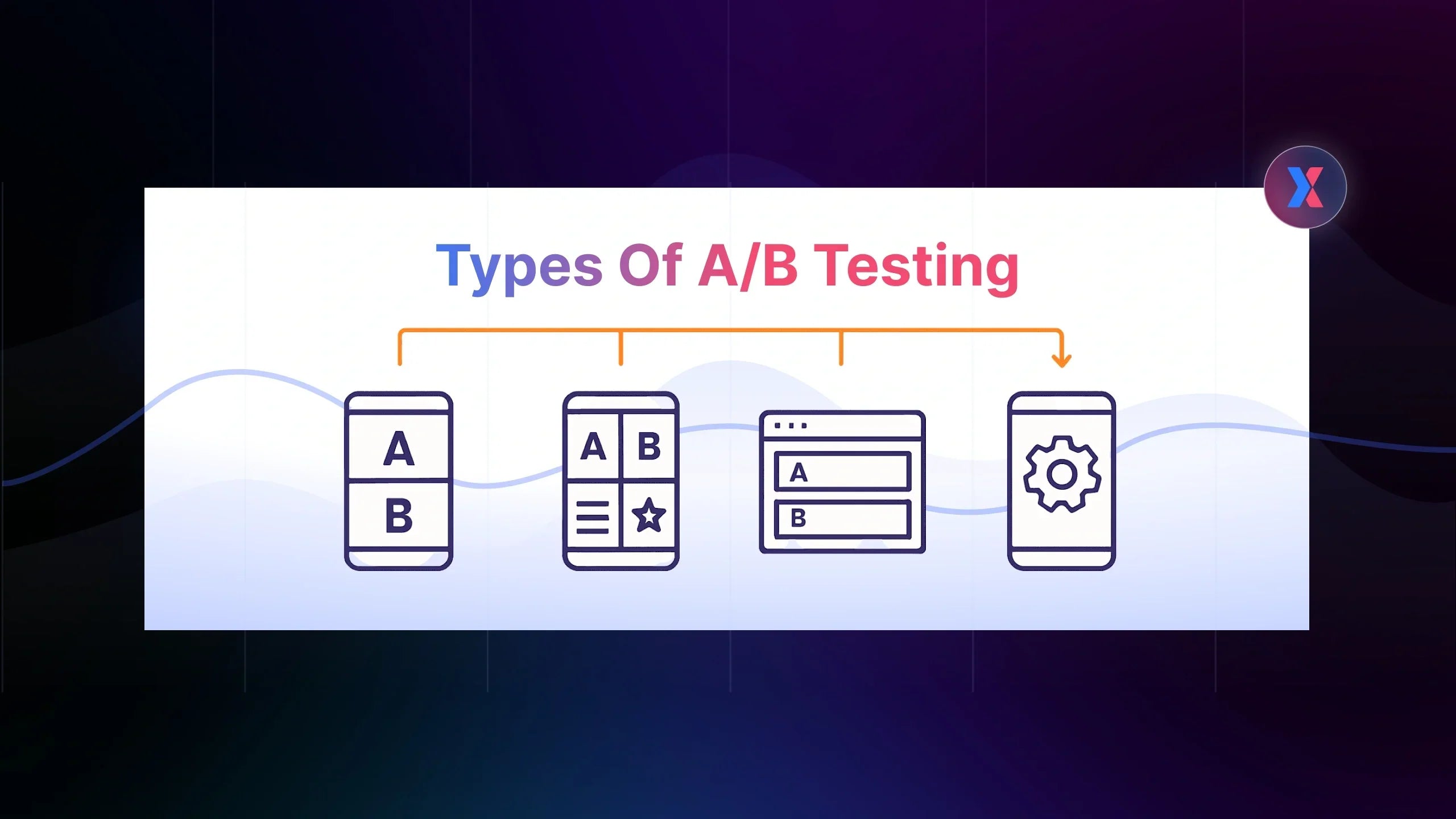
- What Is A/B Testing
- Why There Are Different Types of A/B Testing
- 7 Types of A/B Testing You Should Know
- How to Choose the Right Type of A/B Test for Your E-Commerce
- Real-World A/B Testing Examples from Winning Stores
- How GemX Supports Different Types of A/B Testing
- Final Thoughts
- FAQs about Types of A/B Testing
Many marketers say they run A/B tests, but fewer understand that there are different types of A/B testing, each designed for specific optimization goals. Some experiments compare two versions of a single page, while others evaluate multiple elements, entire conversion funnels, or personalized experiences for different user segments.
Choosing the right testing method is critical. The structure of your experiment directly affects the accuracy of your data, the insights you gain, and the decisions you make afterward.
In this guide, we’ll break down 7 most common types of A/B testing, explain how each method works, and show when to use them to improve conversions and user experience, especially for e-commerce and Shopify stores.

What Is A/B Testing
A/B testing is an experimentation method used to compare two or more versions of a page to determine which variation performs better. Traffic is split between different variants, and visitors are randomly assigned to each version during the experiment.

The goal is to measure how specific changes impact key performance metrics such as conversion rate, click-through rate, revenue per visitor, and user engagement.
Businesses commonly use A/B testing to optimize digital experiences across websites and online stores. Instead of relying on assumptions, A/B testing allows you to make data-driven decisions based on real user behavior. Over time, continuous experimentation helps businesses improve conversion rates, enhance user experience, and increase overall revenue performance.
Why There Are Different Types of A/B Testing
Not every experiment is designed to answer the same question.
Some tests focus on small interface changes, while others evaluate larger structural changes across a page or even an entire conversion funnel. Because the scope of experiments can vary significantly, different types of A/B testing have emerged to handle different testing scenarios.
For example, a marketer might want to test a single element, such as the wording of a call-to-action button. In another case, a team might want to compare two completely different product page layouts. In more complex situations, the goal may be to evaluate how changes across multiple pages affect the overall checkout experience.
These different testing goals require different experiment designs.
|
Testing scope |
Example |
|
Element-level |
CTA button |
|
Section-level |
hero banner |
|
Page-level |
product page redesign |
|
Funnel-level |
checkout flow |
Each level introduces a different level of complexity. Testing a single element usually requires less traffic and produces faster results, while testing multiple variables or full funnels often requires more visitors and longer experiment durations.
Using the right testing method helps ensure your experiment is structured properly, collects enough data, and produces insights you can actually trust. Without the right design, even well-intentioned experiments can lead to misleading conclusions.
7 Types of A/B Testing You Should Know
Not all A/B tests are structured the same way. Depending on what you want to optimize, such as an element, a page layout, or an entire funnel, different experiment designs are used.
Below are 7 common types of A/B testing used in conversion rate optimization (CRO), e-commerce experimentation, and Shopify optimization programs. Let's dive in!
#1. Classic A/B Testing
Classic A/B testing is the most common type of A/B testing used by marketers and e-commerce teams. It compares 2 versions of the same page to determine which variation performs better.
In a standard A/B test, traffic is split between:
-
Variant A (control): the original page
-
Variant B (variant): the modified version
Visitors are randomly assigned to one of the two versions, and performance is measured using metrics like conversion rate, click-through rate, or revenue per visitor.
Example
A Shopify store might test the placement of product reviews:
-
Variant A: reviews displayed below the fold
-
Variant B: reviews displayed directly under the product title

Example of testing the review section placement: below the fold vs. under product title
By comparing the conversion rate between the two versions, the team can determine which layout encourages more purchases.
Classic A/B testing works best for testing single variables or small page changes, such as:
-
Product image placement
-
Promotional messaging
Because it requires relatively low traffic, this method is often the starting point for most experimentation programs.
Once the test collects enough data, teams can analyze the results and determine a winning variant. If you're new to experimentation, it's important to understand how to interpret A/B testing results and determine whether a variant truly outperforms the control.
#2. Split URL Testing (Redirect Testing)
Split URL testing (also known as redirect testing) compares two completely different pages hosted on separate URLs. Instead of modifying the same page, this method redirects users to different URLs during the experiment.
Example:
-
Version A: /product-page
-
Version B: /product-page-redesign
Traffic is split between the two pages, allowing teams to compare the performance of two entirely different layouts.
Split URL testing is commonly used when testing:
-
Full-page redesign
-
New landing page template
-
Significantly different layout structure
The key difference between classic A/B testing and split testing is the scale of change. While classic A/B testing tests variations of the same page with small interface changes, split URL testing tests completely different pages and includes major redesigns.
Because split testing often involves larger design differences, it may require a longer experiment duration to gather reliable data. Teams should ensure tests run long enough to reach statistical confidence before choosing a winner.
#3. Multivariate Testing
Multivariate testing (often abbreviated as MVT) evaluates multiple elements on a page simultaneously. Instead of testing one change at a time, multivariate testing analyzes how different combinations of elements perform together.

Simple example of a multivariate test with multiple headines & CTA buttons
For example, an e-commerce product page might test three elements:
-
Headline
-
Hero image
-
CTA button
Possible experiment combinations could include:
|
Headline |
Image |
CTA |
|
A |
A |
A |
|
A |
B |
A |
|
B |
A |
B |
|
B |
B |
A |
The goal of multivariate testing is to identify the best-performing combination of elements, rather than just evaluating one change at a time.
This approach can reveal interactions between elements that traditional A/B testing might miss. For example, a certain headline may perform better only when paired with a specific image.
However, multivariate testing requires significantly more traffic than classic A/B testing. Because multiple combinations are tested simultaneously, each variation receives a smaller portion of traffic.
For this reason, multivariate tests are typically recommended for high-traffic e-commerce stores or large-scale marketing campaigns.
#4. Multipage Testing
Multipage testing evaluates changes across multiple pages within a conversion funnel. Instead of testing a single page, this method analyzes how a sequence of pages performs together.
A typical e-commerce funnel might include:
-
Product page
-
Cart page
-
Checkout page
In a multipage test, users experience either the original funnel or a modified version.
Example:
-
Variant A: Original funnel flow
-
Variant B: Redesigned funnel layout with optimized product page, cart page, and checkout structure

This testing approach helps teams understand how changes affect the entire customer journey, rather than isolated pages.
Multipage testing is commonly used for:
-
Checkout flow optimization
-
Onboarding experiences
-
Product launch funnels
For Shopify merchants, funnel testing can reveal conversion drop-offs between pages and highlight opportunities to improve the overall purchase experience.
If you're deciding between testing a single page or an entire funnel, understanding the difference between template vs. multi-page testing can help determine the best experiment setup.
Learn more: How to Choose The Right Testing Method Based on What You Test
#5. Client-Side A/B Testing
Client-side A/B testing runs experiments directly in the user's browser after the page loads. This method uses JavaScript to dynamically modify elements on the page.
For example, client-side testing can change headlines, button colors, page layout, or promotional banners.
Because the modifications happen in the browser, you can launch experiments quickly without requiring backend development.

Source: Edgemesh
Most e-commerce A/B testing tools rely on client-side experimentation because it enables teams to test page changes rapidly.
Client-side testing is commonly used for:
-
UI experiments
-
Landing page optimization
-
Product page improvements
However, because changes occur after the page loads, teams must ensure experiments do not negatively impact page performance.
#6. Server-Side A/B Testing
Server-side A/B testing runs experiments before the page is delivered to the user. Instead of modifying the page in the browser, the server determines which version of the experience a visitor receives.
This approach allows deeper experimentation across the product experience.

Source: Edgemesh
Server-side testing is commonly used to experiment with:
-
Pricing algorithms
-
Recommendation engines
-
Feature rollouts
-
Backend functionality
Because the experiment logic runs on the server, this method provides greater flexibility and avoids potential flickering issues sometimes associated with client-side testing.
However, server-side testing usually requires engineering resources, which makes it more common among large product teams or high-traffic platforms.
#7. Personalization Testing
Personalization testing combines A/B testing with audience segmentation. Instead of showing the same variants to all visitors, different user segments see different experiences.

Source: Blog - Croct
For example:
-
New visitors may see a first-time discount banner
-
Returning customers may see a loyalty promotion
Segments can be defined based on:
-
Location
-
Device type
-
Traffic source
-
Browsing behavior
-
Purchase history
This type of experimentation focuses on optimizing experiences for specific audience groups, rather than the entire user base.
Personalization testing is particularly valuable for e-commerce stores with diverse audiences. By tailoring the experience to different visitor segments, businesses can increase engagement and improve overall conversion performance.
When running segmented experiments, it's important to monitor key A/B testing metrics to ensure each segment produces statistically reliable results.
How to Choose the Right Type of A/B Test for Your E-Commerce
With several types of A/B testing available, choosing the right method depends on the scope of your experiment, the amount of traffic your store receives, and the complexity of the changes you want to test.
Selecting the appropriate testing method ensures that your experiment collects enough data and produces reliable insights. In many cases, starting with simpler experiments and gradually expanding your testing program leads to more consistent results.
Below are three key factors to consider when deciding which A/B testing method to use.
Learn more: Shopify A/B Testing: How to Run Experiments That Drive Real Revenue
Experiment Scope
The first factor is the scope of the change you want to evaluate.
Some experiments test a single element, such as a button label or headline. Others compare entirely different page layouts or even redesign the full conversion funnel.
|
Optimization goal |
Recommended test type |
|
Small UI changes |
Classic A/B testing |
|
Page redesign |
Split URL testing |
|
Element interactions |
Multivariate testing |
|
Funnel optimization |
Multipage testing |
If the goal is to improve a single page element, classic A/B testing is usually the most efficient option. However, if you want to compare two completely different page designs, split URL testing is often more appropriate.
When multiple elements interact with each other, such as headlines, images, and CTAs, multivariate testing may help identify the best-performing combination.
For experiments that affect several steps of the buying journey, multipage testing can reveal how changes impact the entire conversion funnel.
Traffic Volume
Another important factor when choosing between different types of A/B testing is the amount of traffic your website receives.
Some experiment designs require significantly more data than others.
|
Test type |
Traffic requirement |
|
A/B testing |
Low to medium |
|
Multipage testing |
Medium |
|
Multivariate testing |
High |
For stores with moderate or low traffic, classic A/B testing typically produces the most reliable results because each variant receives a larger share of visitors.
In contrast, multivariate testing divides traffic across many combinations. Without enough visitors, the experiment may take too long to reach statistical significance.
If you're unsure about traffic requirements, it's helpful to understand how long an A/B test should run before evaluating the results.
Experiment Complexity
The final factor is the complexity of the experiment.
More advanced testing methods often involve:
-
Larger sample sizes
-
Longer experiment durations
-
More detailed analysis
For example, testing a single CTA change may reach statistical significance quickly. However, evaluating an entire checkout funnel may require weeks of data collection before a clear winner emerges.
Regardless of the experiment type, it’s a must-have to carefully analyze results before making decisions. Which ensures that winning variants are selected based on reliable data rather than short-term fluctuations.
In practice, many successful experimentation programs start with simple A/B tests, build confidence in the testing process, and gradually expand into more advanced testing strategies as traffic and experience grow.
Real-World A/B Testing Examples from Winning Stores
To understand how different types of A/B testing work in practice, it helps to look at real experiments run by e-commerce brands. Many companies improve conversions not through massive redesigns, but through targeted experiments on product pages, pricing presentation, and checkout flows.
Below are several real-world A/B testing examples from e-commerce brands, showing how relatively small changes can generate meaningful improvements in conversion rate and revenue.
1. Product Page Experiments
Product pages are one of the most common areas for A/B testing in e-commerce, because even small design or content changes can influence buying decisions.
A well-known example comes from Swiss Gear, the travel gear brand. The company ran a product page optimization test focused on improving the layout and overall user experience of its product detail pages. After testing different page structures and content placement, the optimized variant increased conversions by 52% compared with the original design.

Swiss Gear has increased 52% in conversion after improving the PDP layout
Another example comes from the Dutch telecom brand - Ben NL, which tested changes to its product page design and messaging. A small adjustment to the page layout resulted in a 17.63% increase in conversion rate, demonstrating how minor interface changes can have a measurable impact on user behavior.

Ben NL had 17.63% conversion increase after testing their product page design
Common product page experiments e-commerce teams run include:
-
Move customer reviews closer to the product title
-
Test different product image layouts
-
Rewrite product descriptions or value propositions
-
Change the placement of “Add to Cart” buttons
These tests directly influence how users evaluate products, which is why product pages are often the first place merchants start running A/B tests.
2. Pricing and Promotion Tests
Another high-impact area for e-commerce experimentation is pricing presentation and promotional messaging. Even when the actual price does not change, the way pricing is communicated can affect how customers perceive value.
For example, e-commerce teams frequently test:
-
Discount messaging (e.g., “20% off” vs “Save $20”)
-
Limited-time urgency banners
-
Bundle offers or upsells
-
Free shipping thresholds

Experiments like these focus on improving how offers are presented rather than changing the underlying product.
In some cases, brands also test how pricing information appears on the page. For example, companies may compare showing monthly pricing vs total pricing, or highlight original price vs discounted price to emphasize savings.
These types of experiments help e-commerce teams understand which pricing signals encourage users to complete a purchase.
Learn more: A/B Testing Best Practices for Shopify Stores in 2026
3. Checkout Funnel Experiments
The checkout flow is another critical area for A/B testing in e-commerce, because small improvements can significantly reduce cart abandonment.
A classic example comes from Walmart Canada, which ran experimentation to improve its e-commerce experience and achieved around a 20% increase in conversions after optimizing elements of its online store through testing and UX improvements.

An example of checkout funnel testing from Walmart Canada recorded 20% conversion increase
Checkout experiments typically focus on reducing friction and building trust during the purchase process.
Common checkout A/B tests include:
-
Simplifying shipping information forms
-
Testing trust badges or security icons
-
Adjusting payment option placement
-
Reducing the number of checkout steps
Even minor changes, such as moving shipping details higher on the page or simplifying form fields, can meaningfully improve conversion rates.
What These Examples Show
Across these examples, one pattern is clear: most successful e-commerce A/B tests focus on high-impact pages and simple, testable hypotheses.
Teams often start by testing:
-
Product page layout
-
Promotional messaging
-
Checkout usability
From there, they gradually expand experimentation across more parts of the customer journey.
With the right experimentation strategy, e-commerce brands can continuously refine their storefront experience and improve conversion rate, customer engagement, and revenue over time.
How GemX Supports Different Types of A/B Testing
Understanding the types of A/B testing is one thing, actually running those experiments consistently is another. Many Shopify merchants struggle with experimentation because traditional testing tools require complex setup, custom scripts, or developer resources.
This is where GemX comes in.
Built specifically for Shopify stores, GemX allows you to run structured experiments directly on your store without writing code or modifying their theme files.
Instead of relying on assumptions, merchants can test real changes and see how those changes affect conversions, revenue, and customer behavior.
Run Template Testing for Single-Page Experiments
One of the most common types of A/B testing is classic page-level testing, and GemX supports this through Template Testing.
Template Testing allows merchants to compare two versions of a page template, such as a product page or landing page, to see which one performs better.

For example, a Shopify merchant could test:
-
Two product page layouts
-
Different product image placements
-
Alternative headline messaging
-
Different CTA button designs
Because the experiment runs directly on the template level, merchants can test changes quickly and focus on high-impact page elements that influence conversions.
This makes template testing ideal for merchants who want to run frequent, fast experiments on individual pages.
Test Full Funnels with Multipage Testing
Some experiments involve more than a single page. For example, a merchant might want to test an entire shopping journey, such as:
| (1) Homepage → (2) Collection page → (3) Product page → (4) Checkout |
GemX supports these scenarios through Multipage Testing, which allows merchants to compare two complete customer journeys.
Instead of testing pages individually, merchants can test two full funnel experiences to see which one generates more add-to-carts, checkouts, or purchases.

This approach is especially useful for experiments like:
-
Full storefront redesigns
-
Seasonal campaign funnels
-
Advertorial landing page flows
-
Product launch funnels
By keeping each visitor within one version of the funnel, multipage testing produces cleaner data and more reliable insights about how the entire journey performs.
Control Traffic Split and Target the Right Audience
Every A/B test depends on proper traffic allocation.
GemX allows merchants to control how visitors are distributed between experiment variants, ensuring each version receives enough traffic to produce meaningful results.
Merchants can also target specific audiences, such as:
-
Mobile vs Desktop visitors
-
New vs Returning customers
-
Traffic from specific sources

GemX allows you to target the right audience
This flexibility allows merchants to run more precise experiments and understand how different user segments respond to changes.
Learn more: How to Segment Your Traffic with GemX Advanced Settings
Analyze Experiments with Built-In Analytics
Launching experiments is only the first step. The real value of A/B testing comes from understanding why one variant performs better than another.
GemX includes built-in analytics tools that help merchants analyze experiment performance across their storefront.
These analytics features include:
-
Experiment analytics to compare control vs variant performance

-
Page analytics to track key CRO metrics

-
Journey analysis to visualize how visitors move through the funnel

-
Order analytics to understand the path behind each purchase

With these insights, merchants can identify:
-
Where users drop off in the funnel
-
Which pages drive the most conversions
-
Which experiment variant produces higher revenue
This data-driven approach allows teams to make confident decisions and continuously improve store performance.
Turn Winning Variants into Live Store Experiences
Once an experiment reaches statistical confidence, GemX allows merchants to apply the winning variant instantly.
Instead of manually rebuilding pages or deploying new themes, merchants can simply declare the winning version and publish it to their store.
This streamlined workflow makes experimentation part of everyday optimization rather than a one-off project.
In practice, many Shopify merchants use GemX to build a continuous experimentation process, where each test leads to new insights and new optimization opportunities.
Over time, this approach helps stores systematically improve:
-
Conversion rate
-
Average order value
-
Revenue per visitor
And that’s the real goal of A/B testing, not just running experiments, but turning insights into measurable growth.
Final Thoughts
Understanding the different types of A/B testing is the first step toward building a structured experimentation strategy. For most e-commerce teams, experimentation usually starts with simple page-level A/B tests. As stores gain more traffic and experience, testing can expand into full funnel optimization, multivariate experiments, and segmented personalization.
The key is consistency. Instead of relying on assumptions or occasional redesigns, successful brands treat experimentation as an ongoing process. Small, data-driven improvements compound over time, leading to meaningful gains in conversion rate, customer experience, and revenue.
If you’re running a Shopify store and want to start testing quickly, GemX makes it easy to launch experiments without complex setup or coding. You can test page templates, compare funnel variations, analyze experiment performance, and apply winning variants directly to your storefront.
Install GemX today and start turning real user behavior into conversion insights.
FAQs about Types of A/B Testing
- Subject lines
- Preview text
- Email copy and messaging
- Images and visual layout
- Call-to-action (CTA) buttons
- Send time or day
- If you are testing subject lines, focus on open rate.
- If you are testing email content or CTAs, analyze click-through rate (CTR).
- If your goal is revenue, track conversions or revenue per email.


