


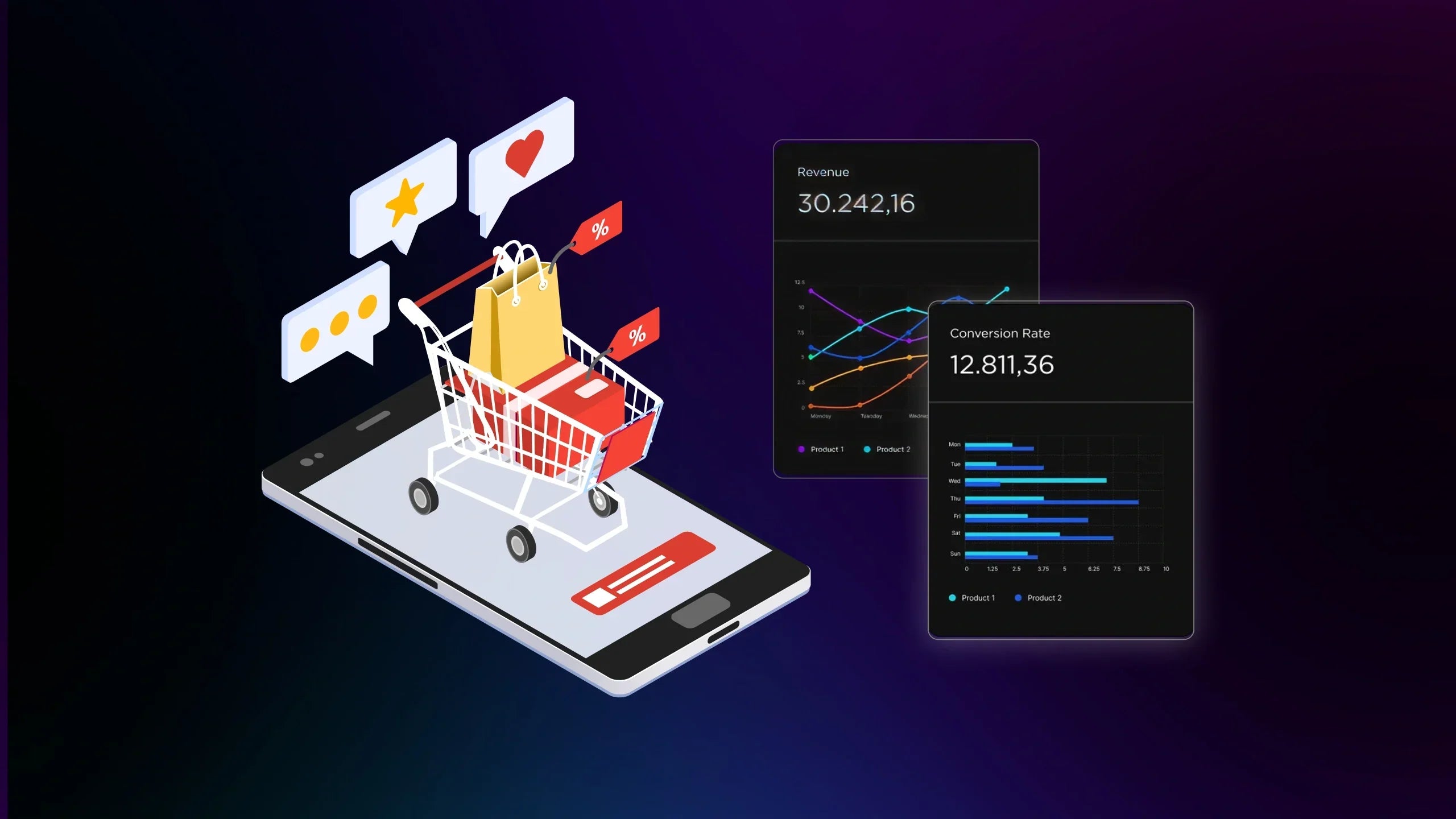
Increasing ecommerce sales is no longer just about driving traffic or running short-term promotions. With rising acquisition costs and more fragmented consumer behavior, sustainable growth depends on how effectively brands convert, monetize, and retain existing demand.
This guide breaks down 11 high-impact growth strategies used by successful ecommerce brands to boost sales through CRO-led execution and data-driven decisions. Each strategy highlights revenue leaks, prioritizes high-impact improvements, and builds a repeatable, scalable growth engine.
What Are The Key Factors That Influence Ecommerce Sales
Before diving into the specific strategies, it is critical to understand the core factors that influence ecommerce sales. Fundamentally, three key levers determine a store’s revenue potential: traffic, conversion rate, and customer lifetime value (CLV).

#1. Store Traffic
Traffic represents the total number of visitors to your online store and is the foundation of the sales funnel. Without sufficient traffic, even the most optimized ecommerce store can’t achieve significant revenue growth. However, quantity alone is not enough, the quality and intent of the traffic matter most. High-intent visitors, those actively searching for your products or interested in your niche, are far more likely to convert than casual browsers.
For Shopify merchants, generating traffic involves a combination of organic search, paid advertising, social media, and referral sources.

SEO remains a cornerstone, as ranking highly for relevant product and category keywords ensures a steady stream of qualified, free traffic. Shopify’s built-in SEO features, including editable meta titles, meta descriptions, and clean URL structures, allow store owners to optimize pages efficiently. Internal linking between collections, product pages, and blog content further improve user experience and search visibility.
Paid advertising can drive immediate, high-intent traffic. Some platforms allow for precise audience targeting, ensuring that every marketing dollar is spent on potential buyers. Tracking Return on Ad Spend (ROAS) and continuously optimizing campaigns based on performance metrics ensures efficiency and profitability.
Referral traffic, partnerships, and influencer collaborations are increasingly important in the modern ecommerce ecosystem. Shopify makes it easy to integrate affiliate programs and track influencer-driven sales. Social media provides platforms where products can be discovered organically and purchased directly via social commerce integrations.
Ultimately, increasing traffic is necessary, but it must be paired with conversion-focused strategies to translate visitors into paying customers.

#2. Conversion Rate
The conversion rate (CR) measures the percentage of visitors who complete a desired action, typically making a purchase. For Shopify stores, improving conversion rate is one of the highest-leverage ways to increase revenue, because even modest gains can significantly impact overall sales.
Effective conversion optimization focuses on the entire customer journey from the landing page and product page to checkout. Website usability is paramount. Reducing friction in navigation, optimizing mobile responsiveness, and simplifying checkout processes all increase the likelihood of completing a sale. Shopify provides built-in tools to streamline checkout, including one-page checkout, guest checkout, and Shopify Payments, which supports Apple Pay, Google Pay, and other frictionless payment options.
Product description is another critical factor. High-quality images, videos, and detailed product descriptions build trust and reduce hesitation. Customers are more likely to convert when they can visualize the product, understand its benefits, and see proof of quality through reviews or user-generated content. Shopify apps like Loox or Judge.me integrate customer reviews seamlessly, enhancing credibility and social proof.
Trust signals, such as secure checkout badges, clear return policies, and transparent shipping information, reduce uncertainty. Personalization further increases conversions. Using data on browsing behavior, past purchases, and abandoned carts, Shopify merchants can deliver tailored recommendations, dynamic landing pages, and personalized emails that resonate with individual customers.
A/B testing and continuous CRO (Conversion Rate Optimization) are essential for ongoing improvement. Testing different headlines, layouts, pricing strategies, and call-to-action buttons allows store owners to identify the most effective elements. Tools like GemX can automate experiments, providing actionable insights for iterative growth. Even a small improvement in conversion rate can generate substantial revenue, particularly when combined with high-quality traffic.
Learn more: 17+ A/B Testing Examples to Boost Conversions on Shopify
#3. Customer Lifetime Value (CLV)
Customer Lifetime Value (CLV) represents the total revenue a business can expect from a single customer over the course of their relationship. Increasing CLV is often more cost-effective than acquiring new customers, because retaining and upselling existing buyers reduces dependency on expensive acquisition channels.
Strategies to boost CLV on Shopify include:
-
Increasing Average Order Value (AOV): Encourage higher-value purchases through upselling, cross-selling, product bundles and volume discounts.
-
Increasing Purchase Frequency: Incentivize repeat purchases using subscription models, loyalty programs, and personalized email campaigns. Shopify supports recurring orders natively or through some apps.
-
Customer Retention and Loyalty: Deliver exceptional post-purchase experiences, including follow-up emails, customer support and loyalty rewards.
-
Segmented Marketing: Analyze purchase history, engagement and behavior to tailor campaigns for high-value customer segments, maximizing both engagement and repeat purchase rate.
By optimizing CLV, Shopify stores not only increase revenue per customer but also build a sustainable base of loyal buyers.
11 High-Impact Growth Strategies to Increase Your Store’s Sales
#1. Improve Your Sales Funnel
The sales funnel is the structured path a customer takes from first discovering your store to completing a purchase. Optimizing this funnel is essential because even the most compelling products will underperform if users face obstacles during their journey.
On Shopify, the funnel begins with discovery via organic search, social media, or paid campaigns, moves through product exploration, consideration, and culminates in checkout. Each stage represents a potential leak in revenue, and addressing these leaks systematically ensures higher conversion rates.
Example: A Shopify fashion retailer observed that 40% of visitors added items to the cart but abandoned them during checkout. By analyzing funnel data through Shopify Analytics and heatmaps, they discovered that the multi-step checkout process and unclear shipping information were primary pain points.

After implementing a one-page checkout, adding progress indicators, and clarifying shipping costs, the store increased completed purchases by 27% within two months.
This example illustrates how identifying bottlenecks at each funnel stage can directly impact revenue, highlighting the importance of ongoing measurement and iterative improvements.
Shopify merchants can take actionable steps to optimize their sales funnels. Start by mapping the customer journey with Shopify Analytics, identifying pages with the highest drop-offs. Simplify navigation and product discovery with clear collections, smart search, and filtering options.
Optimize product pages using high-quality images, videos, and detailed descriptions, and leverage apps like GemPages to create customized landing pages for promotions or campaigns.
Finally, streamline the checkout process by enabling guest checkout, offering multiple payment options like Apple Pay or Shop Pay, and displaying trust signals like secure payment badges and return policies. By systematically addressing funnel leaks, Shopify stores can convert a higher percentage of visitors into paying customers, generating measurable revenue growth.
#2. Launch Paid Ad Campaigns
Paid advertising is a powerful lever to increase ecommerce sales, particularly when organic traffic alone cannot scale quickly. Effective campaigns focus on targeting high-intent audiences, optimizing creatives and measuring ROAS (Return on Ad Spend). Shopify’s integration with platforms like Google, Meta (Facebook & Instagram), and TikTok allows dynamic product catalogs and personalized ad delivery, ensuring that marketing spend drives actual revenue instead of clicks.
Example: A Shopify fitness equipment store used Google Shopping Ads and Facebook retargeting campaigns targeting cart abandoners. By continuously adjusting ad creatives and segmenting audiences by browsing behavior, the store achieved a 35% increase in sales over three months while maintaining a ROAS above 400%. This shows that well-executed paid campaigns can deliver immediate, measurable impact on sales.
To launch effective paid campaigns, Shopify merchants should integrate product catalogs with Google and Meta Ads Managers, enabling dynamic retargeting. Segment audiences into cold, warm & hot traffic, and tailor creatives accordingly. Continuously monitor ROAS, conversion metrics, adjust bids, creatives, and audience targeting. Pair ads with retargeting emails for cart abandoners to maximize conversions and profitability.
#3. Partner with Influencers
Influencer marketing leverages social proof to increase brand awareness and drive sales. Unlike traditional ads, influencer content builds credibility by showcasing products in real-life scenarios, creating trust with target audiences. For Shopify merchants, influencers are especially effective at driving high-intent traffic and increasing conversions when paired with trackable promo codes or affiliate programs.

Example: A Shopify skincare brand collaborated with micro-influencers who shared product tutorials and honest reviews. By using unique promo codes and tracking sales via Shopify, the brand observed a 25% higher conversion rate from influencer traffic compared to standard social campaigns. Influencer partnerships also increased email subscriptions and repeat purchases, demonstrating long-term CLV benefits.
#4. Use Social Media Marketing
Social media serves as both a discovery and conversion channel. Platforms like Instagram, TikTok, and Pinterest enable social commerce, where users can browse and buy products without leaving the app. Shopify merchants leveraging social media effectively can increase both brand awareness and direct sales while fostering customer engagement.
Optimize social profiles for shopping with product tags and direct links to your Shopify store. Post engaging content regularly, including tutorials, behind-the-scenes footage, and customer testimonials. Use paid social campaigns to reach broader audiences and retarget previous visitors. Integrate Shopify’s social commerce features for seamless in-app purchasing.
#5. Enable In-App Shopping
Mobile-first shopping dominates ecommerce, making in-app purchasing critical. Shopify facilitates Buy Buttons and integrations with Instagram, Facebook, and TikTok, allowing users to buy without leaving the platform. Reducing friction in mobile checkout enhances conversion rates, particularly for Gen Z and Millennial shoppers.
Enable Instagram and Facebook Shops with direct checkout. Optimize mobile product pages with fast load times, responsive design and easy navigation. Track performance using Shopify Analytics to identify and resolve bottlenecks in mobile transactions.
Learn more: A/B Testing for Mobile Apps: How It Works, What to Test, and the Best Tools
#6. Start an Email Marketing Campaign
Email marketing is one of the highest ROI channels for ecommerce. Personalized, segmented campaigns encourage repeat purchases, recover abandoned carts, and increase average order value. Shopify integrates natively with email marketing platforms for advanced automation and personalization.
Example: A Shopify pet supplies store implemented segmented email flows for abandoned carts, new subscribers, and repeat customers. Personalized product recommendations and time-limited offers led to a 20–25% increase in revenue per subscriber, highlighting email marketing as a critical retention tool.
Segment customers based on purchase history, engagement, and behavior. Create automated flows for abandoned carts, post-purchase follow-ups, and product recommendations. Personalize emails with names, past purchases, and browsing data. Continuously A/B test subject lines, copy, and visuals to maximize.
Learn more: Marketing Analytics for Shopify: How to Measure, Optimize, and Scale Revenue
#7. Improve Your Ecommerce Site’s User Experience
User experience (UX) is a critical factor in ecommerce conversion. A well-designed UX ensures that visitors can easily find products, navigate categories, and complete purchases without frustration. Shopify merchants should prioritize mobile responsiveness, fast page load times, and intuitive site architecture. Poor UX not only lowers conversion rates but also harms brand perception, as customers are less likely to return or recommend your store.
Merchants should start with a UX audit, analyzing navigation paths, bounce rates, and search behavior using Shopify Analytics and heatmaps. Choose responsive, fast-loading themes optimized for mobile. Implement clear product categorization, robust filtering, and a smart search function to enhance discoverability. Highlight trust signals such as secure checkout, customer reviews and transparent shipping/return policies.
Learn more: 12+ Best Heatmap Tools to Scale Your Shopify Growth
#8. Reduce Cart Abandonment
Cart abandonment is one of the most significant challenges in ecommerce, with average rates around 70%. Recovering abandoned carts directly increases revenue without acquiring new traffic. Factors contributing to abandonment include unexpected shipping costs, complicated checkout processes, and uncertainty about returns or payment security. By proactively addressing these issues, Shopify stores can recover lost sales and boost overall conversion rates.

Use Shopify Email to automate abandoned cart recovery emails. Send the first email within 1–2 hours of abandonment, followed by reminders at 24 and 48 hours. Incorporate incentives like free shipping or limited-time discounts if necessary. Optimize checkout pages to reduce friction, provide trust signals, and display clear shipping and return policies to prevent abandonment in the first place.
#9. Provide Purchase Incentives
Purchase incentives encourage immediate action by creating urgency or enhancing perceived value. These incentives, including limited-time discounts, free shipping, or product bundles, can dramatically increase conversion rates and average order value. In a competitive ecommerce market, incentives are not just marketing tactics, they are strategic levers that influence customer decision-making and behavior.
Shopify merchants can implement purchase incentives using built-in discount features. Test various types of incentives, such as free shipping, first-time buyer discounts, or volume-based bundles. Promote these offers prominently on product pages, collection pages, and during checkout to maximize visibility and impact. Track performance via Shopify Analytics to measure ROI and adjust strategies accordingly.
#10. Start a Loyalty Program
Loyalty programs incentivize repeat purchases, increasing customer lifetime value (CLV) and fostering brand advocacy. Retaining existing customers is more cost-effective than acquiring new ones, and loyal customers often spend more per transaction and refer others. Shopify merchants can leverage loyalty programs to create long-term engagement and sustainable revenue growth.
Example: A Shopify apparel store implemented a points-based loyalty program, rewarding purchases, referrals, and social engagement. Within six months, repeat purchase rates increased by 28%, and overall CLV grew by 22%. Customers who actively participated in the program also became brand ambassadors, sharing products on social media and contributing to organic traffic growth.
Offer tiered benefits to incentivize higher engagement and larger purchases. Integrate the program across Shopify storefronts, email campaigns, and social channels. Regularly analyze participation and redemption rates to refine rewards and maximize ROI.
#11. Provide Excellent Customer Service
Customer service directly influences both conversion rates and retention. In ecommerce, excellent service builds trust, reduces purchase hesitation, and fosters long-term loyalty. Shopify merchants must ensure fast response times, multiple support channels, and clear policies to maintain customer satisfaction and strengthen brand reputation. Studies show that brands with exceptional service achieve up to 25% higher CLV, emphasizing its strategic importance.
Offer multiple contact methods, including email, chat, and social messaging. Provide proactive support via order updates, post-purchase follow-ups, and easy return/exchange processes. Collect feedback to continuously improve service. High-quality service reduces friction and boosts and strengthens customer loyalty, directly contributing to sustainable ecommerce growth.
Final Words
Increasing ecommerce sales today requires a comprehensive, data-driven approach that integrates traffic acquisition, conversion optimization, retention strategies, and customer-centric practices. By addressing each stage of the sales funnel and delivering a seamless shopping experience, merchants can convert casual visitors into repeat buyers and drive sustainable business growth.
Leveraging tools like GemX for A/B testing and CRO optimization allows Shopify merchants to systematically identify bottlenecks, test hypotheses, and implement improvements with measurable impact. This structured approach helps maximize conversion rates, enhance customer lifetime value, and build a scalable growth engine for long-term profitability.
FAQs about Increase Ecommerce Sales


