


Most Shopify stores invest heavily in SEO, publish content consistently, and still struggle to turn that traffic into real revenue. You might be getting clicks, impressions, even ranking improvements, but conversions stay flat. That gap usually comes from one thing: decisions based on assumptions instead of data.
In reality, small changes in headlines, offers, or page structure can significantly impact how users behave after they land on your site. But without testing, you have no way to know what actually works.
That’s where SEO A/B testing comes in. Instead of guessing, you can run controlled experiments, validate what drives clicks and conversions, and scale the variations that truly perform.
In this guide, you’ll discover practical SEO A/B testing ideas you can apply right away to turn traffic into measurable growth.

What is SEO A/B testing
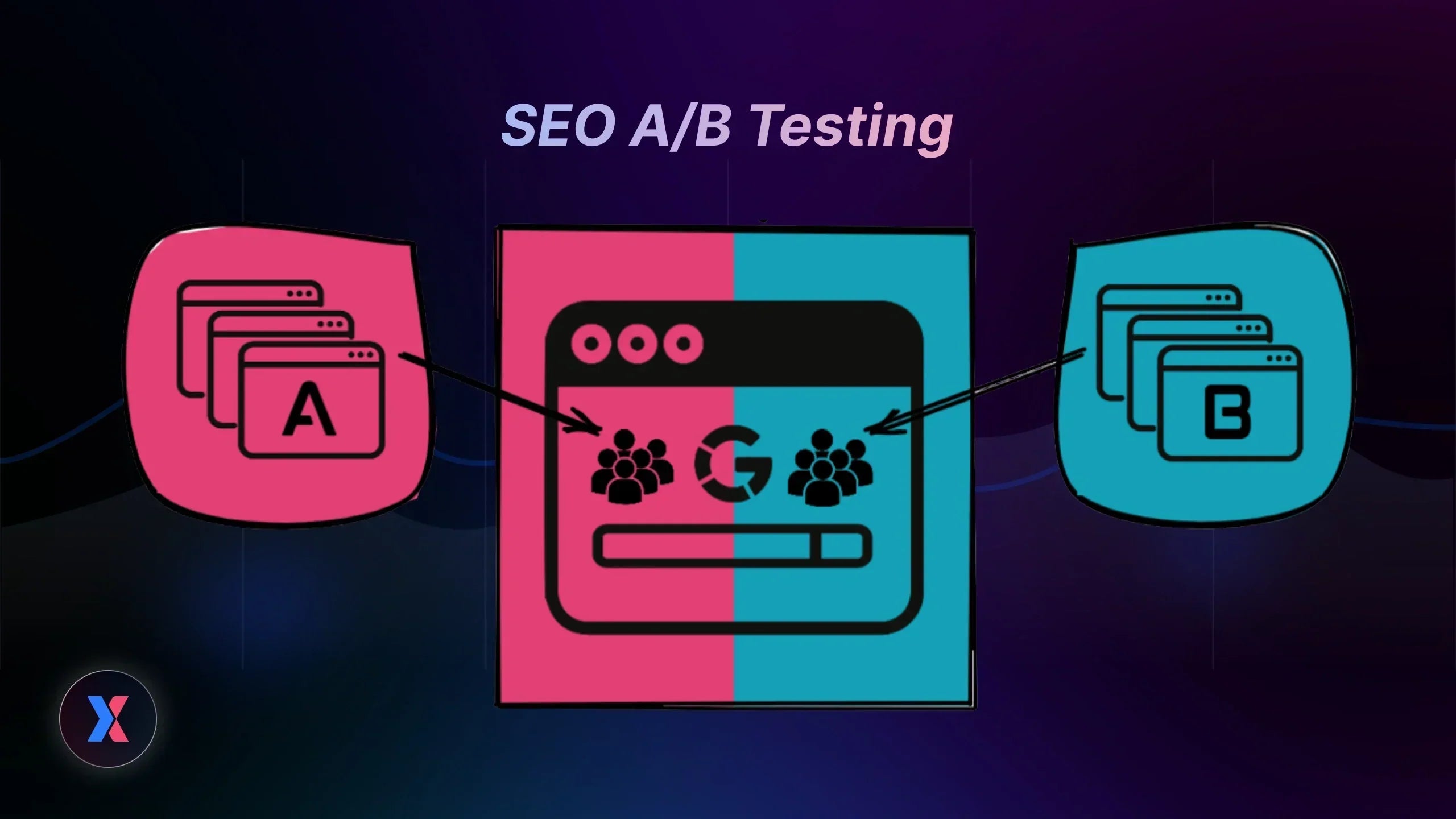
SEO A/B testing is the process of running controlled experiments on SEO pages to compare different variations and see which one performs better. Instead of relying on assumptions, you test elements like title tags, headlines, content structure, or CTAs with real users and measure impact based on clicks, engagement, conversions, or revenue.
It matters because SEO alone only brings traffic. Without testing, you don’t know which version of your page actually drives results. A page can rank well but still underperform if the messaging, layout, or offer doesn’t match user intent.
By using SEO A/B testing, you can move beyond rankings and focus on what truly impacts growth: turning traffic into measurable conversions and revenue.
Learn more: SEO A/B Testing: 20+ Tests That Boost Organic Traffic Fast in 2026
Why SEO A/B Testing Is More Important Than Ever
SEO is becoming more complex and less predictable. As search algorithms, user behavior, and competition continue to evolve, relying on assumptions is no longer enough to drive consistent results.
-
Search algorithms are constantly changing: Google updates its algorithms frequently, often without clear guidance. These changes can impact rankings, traffic, and visibility at any time, which means even well-optimized pages can suddenly lose performance.
-
User behavior in search is shifting: Users no longer interact with search results in the same way. Features like AI-generated summaries and enhanced SERP elements reduce clicks and change how attention is distributed across results. As a result, ranking alone does not guarantee traffic or engagement.
-
Competition in SEO is increasing: More brands are investing in content and targeting the same keywords. This creates a crowded search environment where even small improvements in click-through rate or engagement can make a significant difference.
-
Best practices are not always reliable: Standard SEO recommendations provide a starting point, but they do not guarantee success for every site. What works for one website may not produce the same results for another due to differences in audience, industry, and content.
-
Data-driven testing drives better decisions: SEO A/B testing helps you validate changes with real data instead of assumptions. By continuously testing and learning, you can identify what actually improves performance and turn incremental gains into measurable growth.
15+ SEO A/B Testing Ideas That Actually Drive Results
Shared SEO knowledge is a great starting point, but it only gets you so far. In practice, what drives traffic and revenue is not theory, but what actually works on your specific site.
That’s where SEO A/B testing becomes powerful. Instead of applying generic best practices, you can test changes in a controlled way, measure the impact, and scale what delivers real results.
Below are 17 SEO A/B testing ideas you can run, each designed to help you move from assumptions to data-driven growth.
#1. Title tag variation test
Title tags directly impact click-through rate, and even small changes can lead to noticeable gains. When users scan search results, they are not comparing content in depth, but they are reacting to wording.

Your title tags impact the click-through rate directly.
To run this test, you can try this flow:
-
Select a group of similar pages with consistent traffic.
-
Split them into a control group and a variant group.
-
In the variant group, rewrite the title tags while keeping the primary keyword intact.
For example, instead of a generic title, you might introduce a benefit-driven or outcome-focused version.
Let the test run for a few weeks, then compare CTR and clicks in Google Search Console. What you’re looking for is not just higher clicks, but patterns in language that resonate with your audience.
The key takeaway is simple: better titles don’t just attract clicks, they can also improve rankings over time by sending stronger engagement signals.
#2. Brand position in title tags
One of the most overlooked SEO questions is where your brand should appear in the title. While many assume it belongs at the end, the reality depends on how recognizable your brand is.
To test this:
-
Create variations where your brand appears at the beginning, at the end, or is removed entirely.
-
Apply these changes across a set of comparable pages and monitor how users respond.
If your brand carries strong recognition, leading with it may increase trust and clicks. If not, prioritizing keywords and value messaging usually performs better.
This test helps you balance branding with performance, rather than relying on a fixed rule.
#3. Adding value signals to title tags
Users often make decisions in seconds, and clear value signals can tip the balance. Adding elements like pricing, discounts, or benefits can make your result stand out in crowded SERPs.
To test this:
-
Modify the title tags in your variant group by adding value indicators, such as “From $29” or “Free Shipping.”
-
Keep everything else unchanged so you can isolate the impact.

You can test the standard title vs. the value-packed one.
After running the test, compare CTR and impressions. In many cases, value-driven titles outperform generic ones, especially for commercial queries.
The insight here is that SEO is not just about ranking, but it is about winning the click.
#4. Freshness signals in titles
For many queries, users prefer content that feels current. Adding freshness signals can increase perceived relevance without changing the actual content.
To test this, you can update titles in your variant group with elements like the current year or phrases such as “Updated” or “Latest.” This works particularly well for guides, comparisons, and list-based content.
Track CTR changes over time and compare performance against the control group. If the variant consistently performs better, it indicates that freshness plays a role in user decision-making.
This is a low-effort test that can deliver quick wins.
#5. Meta description optimization test
While meta descriptions do not directly influence rankings, they play a critical role in how users interpret your result.
To run this test, rewrite meta descriptions for your variant group using different messaging angles. For example, you can shift from feature-focused descriptions to benefit-driven ones, or introduce urgency to encourage action.
Monitor CTR changes in Search Console and analyze which messaging resonates more. Over time, you will build a clearer understanding of how to communicate value effectively in limited space.
#6. Content depth and expansion test
Content depth is often correlated with better rankings, but not all long content performs well. What matters is whether the content actually satisfies user intent.
To test this, select a group of pages with relatively thin content. Expand the variant group by adding new sections, FAQs, examples, and supporting visuals. Focus on improving quality rather than simply increasing word count.

Instead of the thin content, you and test a rich content version with FAQs included.
After publishing, monitor impressions, rankings, and engagement metrics. If the expanded content performs better, you can scale this approach across similar pages.
The takeaway is that depth works when it increases usefulness, not just length.
#7. Content format test
Not all users consume content in the same way. Some prefer quick answers, while others want detailed explanations.
To test this, create different versions of the same content format. For example, you might compare a list-based article with a long-form guide. Keep the topic and keyword targeting consistent.
Track engagement metrics such as time on page and scroll depth, along with SEO performance. The results will help you understand how format influences user behavior.
#8. H2 and subheading structure test
Headings help both users and search engines understand your content. Small changes in phrasing can affect how well your page aligns with search queries.
To run this test, rewrite subheadings in your variant group using question-based formats or more intent-driven language. This approach can help capture additional long-tail queries.
Measure performance through impressions and keyword coverage. In some cases, this simple adjustment can expand your visibility significantly.
#9. Above-the-fold content test
What users see first often determines whether they stay or leave. If your key content is hidden or unclear, you may lose engagement quickly.
To test this, adjust the layout of your variant pages so that the most important information appears immediately. This might include moving key sections higher or removing unnecessary elements.
Monitor bounce rate, engagement, and conversion metrics. Improved clarity often leads to better user behavior signals.
#10. Visual layout and readability test
Content structure directly impacts how users interact with your page. Dense text can discourage engagement, while well-structured content keeps users reading.
To test this, improve the layout of your variant pages by adding visuals, breaking up text, and improving spacing. Keep the core content the same to isolate the impact of layout changes.
Track engagement metrics and compare them against the control group. Better readability often leads to longer sessions and stronger performance signals.
#11. Internal link placement test
Internal links are one of the most underrated levers in SEO. While backlinks get most of the attention, internal linking is what helps search engines understand your site structure and distribute authority effectively.
To run this test:
-
Start by selecting a group of pages with similar rankings and traffic.
-
In your variant group, add new internal links from high-authority pages pointing to these URLs.
-
Pay close attention to where you place the links. Links positioned higher in the content or near relevant sections tend to carry more weight.
After a few weeks, track changes in rankings and organic clicks. If the variant group starts to outperform the control group, it’s a clear signal that your internal linking strategy is strengthening topical authority.
The key takeaway is that internal linking is not just about quantity, but about placement, relevance, and context.
#12. Link structure simplification test
Many websites suffer from overcomplicated link structures. Excessive navigation links, footer links, or repeated internal links can dilute page focus and confuse both users and search engines.
To test this:
-
Simplify the internal linking structure on a set of pages.
-
In the variant group, remove unnecessary links and reduce clutter, especially in footers or sidebars.
-
Keep only the links that are contextually relevant and useful.
Monitor engagement metrics and rankings over time. A cleaner structure often improves crawl efficiency and makes it easier for search engines to prioritize key pages.
This test helps you understand that sometimes removing elements can be just as powerful as adding them.
#13. Schema markup implementation test
Schema markup is often overlooked because it feels technical, but it can have a direct impact on how your pages appear in search results.
To run this test, add structured data to a group of pages in your variant set. This could include FAQ schema, product schema, or review schema, depending on the page type. Leave the control group unchanged.
Once the changes are live, monitor Search Console for improvements in CTR and visibility. You should also manually check search results to see whether your pages are appearing with rich features like FAQs or star ratings.
The takeaway here is that schema does not just help search engines understand your content, it can also make your listings more attractive and clickable.
#14. Offer and messaging test on SEO pages
Many SEO pages focus entirely on traffic and ignore conversion. As a result, even high-traffic pages can underperform in terms of revenue.
To test this, you can introduce different offers or messaging variations on pages that already receive organic traffic. For example, you might compare a discount-based offer with a bundle or free shipping incentive.

Adding a discount on your page that already receives organic traffic to boost sales.
Run the test by keeping traffic constant while changing only the offer. Then track conversion rate and revenue per visitor.
This type of experiment often reveals that you don’t need more traffic to grow revenue, you just need a stronger value proposition.
#15. Product layout and UX test
User experience plays a major role in conversion, especially for e-commerce pages. Even small layout changes can influence how users interact with your content.
To test this, create variations with different layouts. For example, you might compare a grid layout with a list layout, or test different CTA placements and trust signals such as reviews or badges.
Measure engagement and conversion metrics rather than just traffic. If the variant improves conversion without affecting rankings, you’ve unlocked additional value from existing traffic.
The key insight is that SEO and UX are closely connected, even if they are often treated separately.
#16. CTA messaging test on SEO pages
A common issue with SEO-driven pages is the lack of clear next steps. Users may find your content helpful, but still leave without taking action.
To run this test, create different CTA variations in your content. For example, compare generic CTAs like “Learn More” with benefit-driven ones that clearly communicate what users will gain.

Place these CTAs in strategic positions within your content, such as after key sections or near the conclusion. Then track click-through and conversion metrics.
You’ll often find that stronger, more relevant CTAs significantly improve conversion without impacting SEO performance.
Learn more: CTA Testing Guide: A Proven Way to Increase Clicks and Revenue in 2026
#17. Landing page variation for SEO traffic
Not all organic traffic behaves the same way. Users coming from search often have different intent levels, and a single page experience may not work for everyone.
To test this, create different landing page variations targeting the same keyword. For example, one version might be more detailed and information-heavy, while another is more streamlined and conversion-focused.
Split traffic between these variations and track performance across engagement, conversion, and revenue metrics.
This test helps you understand how to better align page experience with user intent, which can dramatically improve revenue per visitor without changing your traffic source.
How to Run SEO A/B Tests on Shopify
Running SEO A/B tests on Shopify is less about theory and more about execution. The challenge is not knowing what to test, but how to test without disrupting your live store or affecting SEO stability.
Here’s a practical workflow that reflects how testing actually happens in a real Shopify setup.
Step 1: Identify high-impact pages using GemX analytics
Instead of guessing which pages to test, start with real performance data. Inside GemX analytics, you can quickly identify where the biggest gaps exist across your funnel.
Focus on pages that show:
-
Strong traffic but low conversion rate
-
High impressions but weak downstream performance
-
Consistent sessions but low revenue per visitor

You can track all your store pages in GemX to identify high-impact pages for testing.
These are the pages where A/B testing delivers the fastest ROI. You are not trying to generate new traffic, you are optimizing traffic that already exists.
This step is critical because it shifts your approach from “what should we test” to “where can we unlock the most impact.”
Learn more about Page Analytics in GemX.
Step 2: Define one clear hypothesis
Before creating any variation, decide exactly what you want to improve. A good test always starts with a focused hypothesis tied to a measurable outcome.

A testable hypothesis for A/B testing needs to tie to a measurable outcome.
For example:
-
A more benefit-driven headline will improve click-through rate
-
A stronger offer will increase the conversion rate
-
A simplified layout will reduce drop-off
Keeping the scope tight ensures that when performance changes, you can clearly attribute the result to a specific decision.
Step 3: Build variations using your page builder
Instead of editing your live theme, create variations using your page builder. In most Shopify setups, this is where tools like GemPages come in.
You can duplicate your existing page and adjust only the elements related to your hypothesis, such as:
-
Headline and above-the-fold messaging
-
Content structure and layout
-
CTA placement and offers

Because this happens at the page level, you maintain full control over design while avoiding risk to your live store.
Step 4: Split traffic in a controlled way
Once your variations are ready, the next step is distributing traffic between them. This is where a testing tool like GemX becomes essential.
Instead of manually rotating changes, you can:
-
Split traffic between control and variant pages
-
Ensure both versions receive comparable exposure
-
Run experiments without constantly modifying live pages
This controlled setup ensures that performance differences come from the variation itself, not inconsistent traffic distribution.
Step 5: Measure performance beyond traffic
SEO testing should not stop at rankings or clicks. Inside GemX, you can track how each variation performs across real business metrics.
You should focus on:
-
Conversion rate
-
Revenue per visitor
-
Engagement behavior

You should track more than clicks. GemX helps you focus on real business metrics like revenue per visitor.
This is where the real insights come from. In many cases, a variation with similar traffic can generate significantly more revenue.
Step 6: Apply the winner and scale
Once you identify a clear winner, you can apply that version across similar pages and scale the impact. From there, you can:
-
Apply the winning patterns across your site
-
Continue testing new hypotheses
-
Build a repeatable optimization system
Over time, this turns SEO from a traffic channel into a structured growth engine.
Key takeaway: The biggest shift is moving from assumptions to controlled experimentation. With the right setup, you can test safely, learn faster, and continuously improve performance without risking your store.
Common Mistakes in SEO A/B Testing
Even with a solid strategy, many SEO A/B tests fail because of execution mistakes. Most of these issues don’t come from what you test, but how you run the test.
-
Testing too many variables at once: When multiple elements are changed together, it becomes impossible to know what actually caused the performance shift. Always isolate one meaningful variable per test.
-
Ending tests too early: SEO takes time. Short-term spikes or drops can be misleading, especially with fluctuating traffic. If you stop a test too early, you risk making decisions based on incomplete data.
-
Not having enough sample size: Low traffic or small page groups often lead to unreliable results. Without sufficient data, even large performance differences can be statistically insignificant.
-
Focusing only on traffic metrics: Many teams only track rankings or CTR. However, traffic does not always translate into business results. Ignoring conversion rate and revenue per visitor can lead to false winners.
The key takeaway is simple: good testing is not just about ideas, but about discipline in execution.
Learn more: 13+ Common A/B Testing Mistakes That Hurt Your Conversions (+ How to Fix Them Quickly)
Conclusion
SEO today is no longer just about rankings or traffic. The real difference comes from what happens after the click. Without testing, you are relying on assumptions, and that often leads to missed opportunities in both conversion and revenue.
SEO A/B testing gives you a structured way to move from guesswork to data-driven decisions. By continuously testing elements like titles, content, offers, and page experience, you can identify what truly works for your audience and scale those insights across your store.
The impact is not just incremental. Small improvements in CTR, engagement, or conversion rate can compound over time into meaningful growth.
If you want to turn your SEO traffic into measurable revenue, the next step is simple. Install GemX and start running controlled experiments directly on your store.
FAQs about SEO A/B Testing Ideas


