


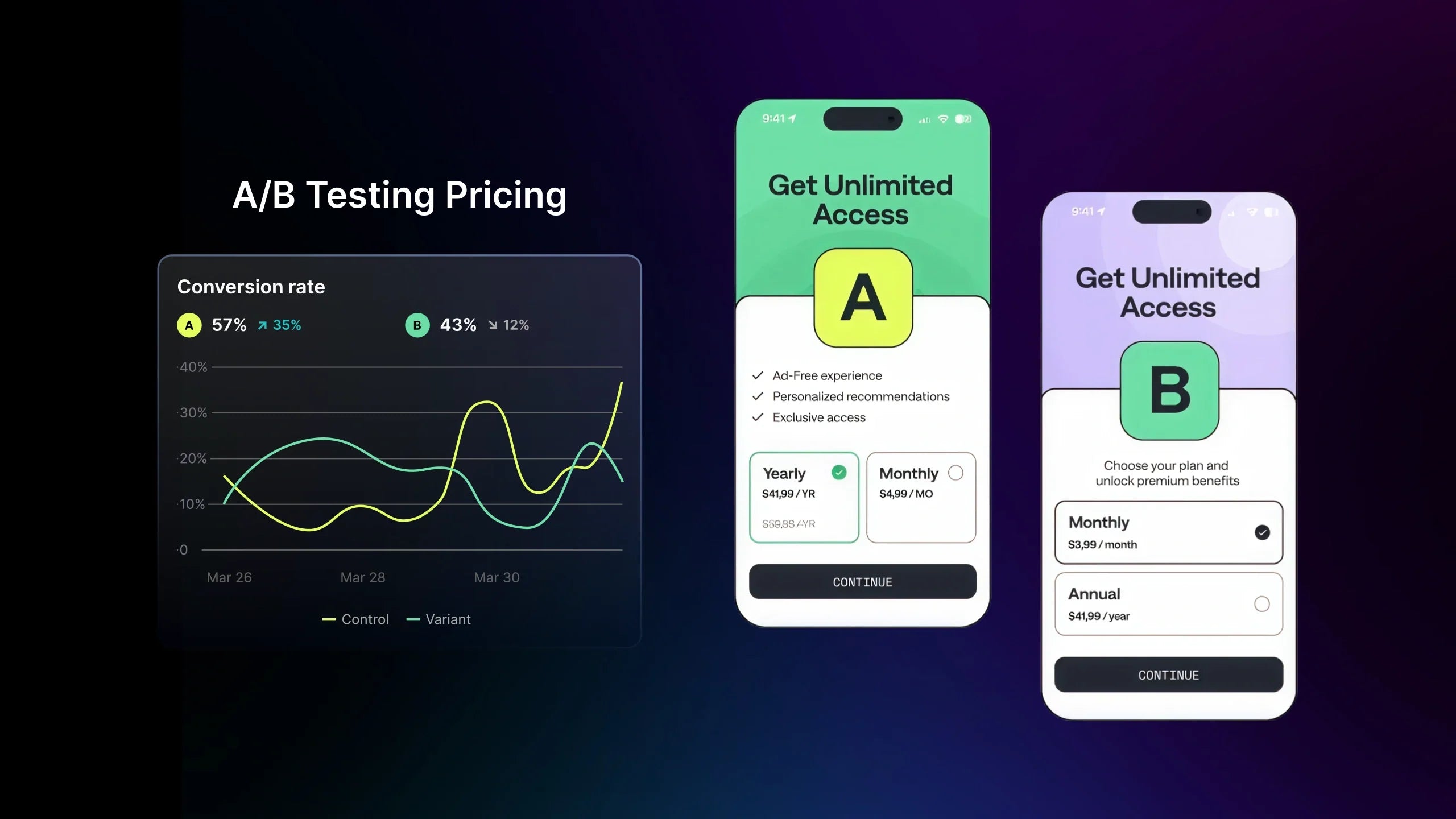
- What Is A/B Testing Pricing?
- Why A/B Testing Pricing Matters More Than Other CRO Tests
- Is A/B Testing Pricing Legal and Ethical
- How A/B Testing Pricing Actually Works from CRO Perspective
- 6 Proven Pricing Strategies You Can A/B Test
- How to A/B Test Your Pricing the Right Way
- Pricing Presentation vs. Pricing Point: What You Should Test First
- How Shopify Brands Use A/B Testing Pricing to Scale Revenue
- Common A/B Testing Pricing Mistakes (And How to Avoid Them)
- Final Words
- FAQs about Pricing A/B Testing
Pricing is one of the most powerful growth levers in eCommerce, but it’s also one of the easiest ways to lose customers if you get it wrong. A small pricing change can increase revenue significantly, or quietly destroy trust, conversion rates, and long-term customer value. That’s why more Shopify brands are turning to A/B testing pricing instead of relying on gut feeling or competitor copycats.
Today, let’s break down how A/B testing pricing actually works in practice. You’ll learn what pricing tests are safe to run, which pricing strategies are worth experimenting with, how to measure results beyond conversion rate, and how Shopify brands use pricing experiments to increase AOV, retention, and revenue without damaging trust.
If you want a data-driven way to optimize pricing while protecting your brand, this is where to start.
What Is A/B Testing Pricing?
At its core, A/B testing pricing is the process of experimenting with pricing-related elements to understand how customers respond, and to improve revenue outcomes based on real behavior rather than assumptions.
Pricing A/B testing is not random discounting to boost short-term sales, undercutting competitors without understanding margin implications, or one-time optimization. Effective pricing experiments are hypothesis-driven, measured across multiple metrics, and repeated as customer behavior and market conditions change.
The keyword here is pricing-related, not just the price number itself.
In practice, pricing experiments usually focus on price presentation, not price discrimination. This includes testing how value is communicated relative to price, how pricing tiers are structured, and how offers are framed within the customer journey.
Examples of what pricing A/B tests typically involve include:
-
Testing bundle pricing versus individual product pricing
-
Comparing the monthly versus the annual plan emphasis
-
Experimenting with “Save $X” versus “Save X%” messaging
-
Adjusting pricing table layouts, anchors, or comparisons
-
Testing free trial framing or payment cadence
More than conversion rate, pricing also influences average order value, customer lifetime value, churn, and brand positioning. A pricing test that increases conversions but lowers AOV, or attracts low-quality customers, may look successful on the surface while hurting long-term growth.
When done correctly, A/B testing pricing becomes a structured way to answer critical questions like:
-
Which price framing helps customers understand value faster?
-
Which pricing structure encourages upgrades without increasing churn?
-
How can we optimize revenue without eroding trust?

Why A/B Testing Pricing Matters More Than Other CRO Tests
Many CRO experiments focus on surface-level improvements such as headlines, button colors, or layout tweaks. While these tests can lift conversion rates, their impact is often incremental. A/B testing pricing, on the other hand, directly influences how much revenue each visitor generates, making it one of the most powerful forms of optimization available to eCommerce teams.
- Pricing changes affect revenue, not just clicks
Most CRO tests aim to increase the percentage of users who convert. Pricing tests go further by affecting revenue per visitor, average order value, and customer lifetime value at the same time. A pricing experiment that slightly lowers conversion rate but increases AOV can still produce higher total revenue. This is why pricing optimization cannot be evaluated through conversion rate alone and requires a broader, revenue-focused lens.

- Pricing shapes perceived value and brand positioning
Price is not just a number; it’s a signal. Customers use pricing to judge product quality, credibility, and fairness. Small changes in how pricing is framed can shift perception dramatically. Testing pricing presentation helps brands understand whether they are positioning themselves as premium, value-driven, or commodity sellers. Unlike visual CRO tests, pricing experiments shape long-term brand expectations, not just immediate behavior.
- Pricing experiments reveal customer sensitivity faster
Pricing tests surface customer sensitivity more clearly than most CRO experiments. When you test price anchoring, bundles, or payment cadence, users respond in ways that reveal what they truly value. These insights often uncover segments that are willing to pay more, upgrade faster, or churn when value is unclear. For Shopify merchants, this data is far more actionable than knowing which button color converts better.
- Pricing mistakes are costly, which makes testing essential
Because pricing decisions carry higher risk, guessing is expensive. An untested pricing change can reduce trust, hurt margins, or attract low-quality customers. A/B testing pricing provides a controlled environment to validate assumptions before rolling changes out broadly. Compared to other CRO tests, the downside of getting pricing wrong is much larger, which is exactly why it deserves deeper, more disciplined experimentation.
Is A/B Testing Pricing Legal and Ethical
Pricing experiments carry more weight than most CRO tests. A poorly designed pricing test can raise legal concerns, damage customer trust, and create long-term brand risk. Understanding what’s allowed is essential before running any tests for your pricing.
Is A/B Testing Pricing Legal for Shopify?
In most regions, A/B testing pricing is legal, as long as it complies with consumer protection and fair pricing laws. Regulations in markets like the United States and the European Union are primarily designed to prevent unfair or discriminatory pricing, not experimentation itself.

For eCommerce brands, this means pricing tests must follow clear, rule-based logic. Public discounts, subscription tiers, bundles, and time-bound promotions are generally acceptable. What becomes risky is silently charging different prices to similar customers without transparency or justification.
Negative vs. Positive Price Discrimination
Not all pricing variation is treated the same. The key distinction lies between positive and negative price discrimination.
Positive price discrimination, such as student discounts, loyalty rewards, or clearly advertised promotions, is widely accepted because it’s transparent and available under defined conditions. Negative price discrimination, on the other hand, involves showing different prices to comparable users based on hidden factors like location, device, or inferred willingness to pay. This is where pricing tests cross into legal and ethical danger.
What You Should NOT Test in Pricing Experiments
A common mistake is directly testing different price points for the same product across random user groups. While this may seem like a fast way to find a “winning price,” it often creates trust issues and inconsistent customer experiences.
Shopify merchants should avoid:
-
Showing different base prices for the same product without visible differences in the offer
-
Using location, identity, or behavioral signals to silently alter prices
-
Running pricing tests that customers cannot clearly understand or explain
Short-term gains from these tests rarely justify the long-term cost.
The Shopify-Safe Way to Run Pricing A/B Tests
The safest and most effective approach is to test the pricing presentation rather than the price itself. Instead of changing numbers, focus on how value is communicated.
Examples of Shopify-safe pricing experiments include:
-
Testing pricing table layouts or tier comparisons
-
Comparing savings framing (“Save $20” vs. “Save 15%”)
-
Emphasizing monthly versus annual plans
-
Testing bundles, add-ons, or payment cadence

This approach keeps pricing fair, transparent, and compliant while still unlocking meaningful revenue insights. When done correctly, A/B testing pricing improves conversion and revenue without putting trust or compliance at risk.
How A/B Testing Pricing Actually Works from CRO Perspective
To run effective A/B testing pricing, you need to rethink what “price” really means in a conversion context. In CRO, price is rarely just a number. It’s a signal that shapes how visitors evaluate value, risk, and confidence before making a decision. That’s why pricing tests behave much more like landing page experiments than traditional price changes.
Price Is Perceived Value, Not Just a Number
Customers don’t evaluate price in isolation. They evaluate it in relation to benefits, alternatives, and expectations. The same price can feel expensive or reasonable depending on how it’s positioned. From a CRO perspective, pricing tests aim to influence perceived value, not manipulate cost.
This is why many successful pricing experiments leave the actual price unchanged and instead adjust how value is framed around it. When perception shifts, behavior follows.
Key Pricing Variables Worth Testing
Most pricing experiments focus on a small set of high-impact variables that shape perception:
-
Price anchoring: Showing a higher reference price to make the current option feel more affordable
-
Tier structure: Adjusting how plans or bundles are grouped and compared
-
Discount framing: Testing dollar savings versus percentage savings
-
Bundle logic: Comparing single-product pricing against bundled offers
-
Payment cadence: Emphasizing monthly versus annual billing to influence commitment
Each of these elements changes how users interpret the same underlying price.
Why Pricing Tests Behave Like Landing Page Experiments
In practice, A/B testing pricing follows the same CRO workflow as landing page testing. You start with a hypothesis, change one variable, split traffic, and measure impact across multiple metrics. The difference is that pricing tests require broader evaluation, while conversion rate alone is never enough.
Metrics like average order value, revenue per visitor, upgrades, and retention matter just as much. This is why pricing experiments are best run as controlled CRO tests rather than isolated pricing changes.
When pricing is treated as part of the experience, your A/B testing becomes a strategic growth lever instead of a risky gamble.
6 Proven Pricing Strategies You Can A/B Test
Not all pricing strategies should be tested the same way. Some focus on maximizing revenue per customer, others on speed of adoption or market share. The key is understanding which strategy fits your business stage and how to A/B test it safely using pricing presentation, structure, and messaging.
Below are six proven pricing strategies that Shopify and eCommerce brands can experiment with using A/B testing pricing, without risking trust or compliance.
1. Value-Based Pricing
Value-based pricing focuses on what customers believe your product is worth, rather than what it costs to produce. In pricing experiments, this strategy is less about changing the price point and more about testing how clearly value is communicated.

A/B tests for value-based pricing often involve highlighting differentiators, benefits, or outcomes more prominently before showing the price. For example, emphasizing premium features, guarantees, or social proof can make the same price feel more justified. When perceived value increases, customers become less price-sensitive, which supports higher AOV and stronger retention.
This strategy works especially well for branded products, subscriptions, and products with clear differentiation.
2. Competitive Pricing
Competitive pricing experiments compare your offer against alternatives in the market. The goal is not always to be cheaper but to help customers quickly understand where you sit relative to competitors.

In pricing experiments, this often shows up as testing comparison tables, “best value” badges, or tier ordering rather than changing the actual price. These tests help shoppers self-select the option that feels safest or most reasonable.
Competitive pricing is common in saturated categories like apparel, accessories, and consumer goods. However, brands should be cautious: competing on price alone can compress margins and attract low-loyalty customers if value isn’t clearly reinforced.
3. Price Skimming
Price skimming starts high and gradually lowers prices to reach broader segments over time. From a testing perspective, this strategy relies heavily on early adopters who associate higher prices with exclusivity or innovation.

A/B tests here typically focus on positioning rather than discounting. Experiments may test premium framing, limited availability messaging, or launch-specific bundles. The price remains the same, but the way it’s justified evolves.
This approach is best suited for new product launches, limited editions, or brands with strong authority. Without sufficient demand or differentiation, price skimming can backfire by pushing potential buyers toward cheaper alternatives.
4. Cost-Plus Pricing
Cost-plus pricing is one of the simplest strategies: production cost plus a fixed margin. While straightforward, it often leaves revenue on the table if value perception is weak.

In pricing experiments, cost-plus pricing benefits most from testing information order. For example, showing benefits and use cases before the price versus leading with the price itself can dramatically change conversion behavior.
This strategy is common for early-stage Shopify merchants or physical products with tight margins. While easy to calculate, it should evolve over time as brands gain deeper insight into customer willingness to pay.
5. Penetration Pricing
Penetration pricing uses lower prices to quickly gain market share. The objective is adoption first, profitability later. In A/B testing, this strategy often focuses on minimizing friction rather than advertising “cheap” pricing.

Source: Shopify
Tests may compare entry-level offers, starter bundles, or first-purchase incentives against standard pricing. The key is ensuring that lower prices attract the right customers, those likely to repurchase or upgrade.
This approach can be effective in competitive markets, but it requires a clear path to long-term monetization. Without retention or upsell strategies, penetration pricing can lock brands into unsustainable margins.
6. Dynamic Pricing
Dynamic pricing adjusts prices based on demand, timing, or context. While common in industries like travel and ride-sharing, it requires caution in e-commerce.

Source: 200Lab
For Shopify brands, dynamic pricing experiments usually focus on time-based offers rather than real-time price changes. Flash sales, limited-time bundles, and seasonal promotions are safer ways to test urgency without confusing customers.
Dynamic pricing works best when customers understand why prices change. Without transparency, it can feel arbitrary and erode trust. For this reason, dynamic pricing should be tested carefully and paired with clear messaging.
How to A/B Test Your Pricing the Right Way
Running A/B testing pricing requires more discipline than most CRO experiments. Pricing touches revenue, margins, and customer trust at the same time, so each test needs a clear goal, clean data, and controlled execution. This framework combines proven pricing test flows with CRO best practices, adapted specifically for Shopify and eCommerce teams.
Step 1: Define the Right Pricing Goal
Before launching any pricing experiment, you need to decide what “success” actually means. Many teams default to conversion rate, but pricing optimization is rarely about conversion alone.
Common pricing goals include increasing revenue per visitor, lifting average order value, improving upgrade rates, or protecting long-term customer lifetime value. A pricing test that boosts conversions but reduces AOV or attracts low-quality buyers may look positive in the short term while hurting overall growth.
This is why “conversion only” is a trap. Pricing experiments should always be tied to business outcomes, not surface-level metrics.
Step 2: Choose Pricing Metrics That Actually Matter
Once your goal is clear, select metrics that reflect the full impact of pricing changes. Conversion rate (CR) shows how appealing an offer is, but it doesn’t tell the whole story.
For pricing tests, Shopify merchants should track a combination of:
-
Conversion rate (CR): Understand purchase behavior
-
Average order value (AOV): See how much customers spend per order
-
Average revenue per user (ARPU): Measure revenue across users
-
Customer life-time value (CLV): Assess long-term value and retention
Pricing data should be read through trade-offs. A winning variant is not always the one with the highest conversion rate. It’s the one that best aligns with your revenue and growth objectives.
Learn more: Understanding Metrics and Session Views
Step 3: Segment Your Audience
Pricing sensitivity varies widely across customer types, which makes segmentation essential. Running pricing tests on blended traffic often produces misleading results.
Useful Shopify pricing segments include:
-
New vs returning customers
-
High-intent vs low-intent traffic (e.g., product page visitors vs blog traffic)
-
Funnel-based segments, such as first-time buyers, upsell viewers, or subscription prospects
Segmenting pricing experiments helps you understand who responds to pricing changes and why, instead of averaging out valuable insights.
Step 4: Form a Clear Pricing Hypothesis
Every pricing test should start with a clear, testable hypothesis. Vague assumptions lead to unclear results.
A weak hypothesis might be “Lowering the price will increase conversions”.
A strong pricing hypothesis is specific and measurable:
|
“Highlighting annual savings on the subscription plan will increase annual plan sign-ups by 15% without reducing total revenue”. |
Pricing hypotheses need numbers. Without clear expectations, it’s impossible to judge whether a test actually succeeded.
Step 5: Design and Run the Test
With a hypothesis in place, it’s time to design the experiment. Most pricing tests use:
-
A/B tests for single-variable changes
-
A/B/n tests for multiple variations
-
Multipage tests when pricing affects the full funnel
Traffic should be split evenly, and tests should run long enough to account for daily and weekly behavior patterns. Pricing experiments need a stability window, meaning you should avoid running them during major sales, launches, or traffic spikes.
Learn more: Template Testing vs. Multipage Testing: When to Use Each
Step 6: Analyze, Learn, and Iterate
There are no failed pricing tests, only incomplete learning. Even when a variant underperforms, it reveals how customers interpret value and pricing signals.
Post-test analysis should focus on why users behaved differently, not just which version “won.” These insights should inform future pricing presentation, bundling, or tier structure experiments.
Pricing Presentation vs. Pricing Point: What You Should Test First
For most Shopify merchants, the biggest pricing wins don’t come from changing the number itself. They come from changing how the price is perceived. This is why testing pricing presentation consistently delivers stronger results than testing price points, with far less risk to trust, compliance, and brand positioning.
Why Pricing Presentation Outperforms Price Point Testing
Testing price points directly often creates friction. Different users seeing different prices can feel unfair, confuse returning customers, and raise legal or ethical concerns. Even when conversion increases, the long-term cost can outweigh the short-term gain.
Pricing presentation tests work differently. They influence context, not cost. By reframing value, clarifying options, and guiding comparison, you help customers make confident decisions without altering the actual price. From a CRO perspective, this approach reduces risk while preserving clean, reliable data, making it ideal for ongoing A/B testing pricing on Shopify.
Price Anchoring Layout
Price anchoring changes how customers evaluate value by introducing a reference point. This might be a higher-tier plan, a crossed-out “regular price,” or a bundle that makes a core product feel more affordable.
A/B tests here often compare layouts that place anchors above, beside, or below the main offer. The goal is to see which structure helps customers understand value faster and choose the intended option without hesitation.
Comparison Tables and Tier Structure
Comparison tables help users self-segment. Instead of asking “Is this expensive?”, customers ask “Which option fits me best?”.
Testing different table layouts, feature ordering, or “most popular” badges can significantly impact upgrades and AOV. These experiments are especially effective for subscription products and bundles, where clarity drives confidence.
Savings Framing: “Save $X” vs. “Save X%”
Savings framing directly affects perceived value. Some audiences respond better to concrete dollar savings, while others react more strongly to percentages.
A/B testing pricing presentation here is simple and safe: keep the price constant and test how savings are communicated. The winning variant often depends on product price range and customer intent level.
Monthly vs. Annual Emphasis
Payment cadence is one of the most overlooked pricing levers. Testing whether monthly or annual plans are emphasized, through layout, copy, or default selection, can shift commitment levels without changing price.
For Shopify brands, this is a CRO-safe and legally safe way to influence revenue mix and retention while keeping pricing transparent.
By prioritizing pricing presentation over price points, merchants unlock consistent gains with lower risk. It’s the smartest place to start when building a scalable pricing experimentation strategy.
How Shopify Brands Use A/B Testing Pricing to Scale Revenue
High-performing Shopify brands don’t treat pricing as a fixed decision. They treat it as an evolving system that’s continuously optimized through experimentation. Instead of guessing or copying competitors, they use pricing testing to validate how customers respond at each stage of the funnel.
Subscription Pricing and Plan Structure
For subscription-based products, pricing tests often focus on plan structure rather than plan cost. Brands experiment with how plans are ordered, which option is highlighted as “most popular,” and how benefits are distributed across tiers.

A common test is emphasizing annual plans over monthly ones through visual hierarchy, savings messaging, or default selection. These experiments frequently increase upfront revenue and improve retention without requiring any change to the actual subscription price.
Bundles and Upsells on Product Pages
Bundles are one of the most effective pricing levers in e-commerce. Shopify brands use pricing tests to compare single-product offers against curated bundles that increase perceived value.
Instead of discounting aggressively, they test bundle framing: which products are grouped together, how savings are communicated, and where bundles appear on the page. When done well, bundle pricing tests consistently lift average order value while keeping margins healthy.
Landing Page Price Framing
On landing pages, pricing experiments rarely involve changing numbers. Instead, brands test how price is framed within the page narrative.
Examples include delaying price visibility until after key benefits are explained, anchoring the offer against a higher-tier option, or reinforcing price with guarantees and social proof. These tests help reduce price resistance and improve conversion quality, especially for higher-ticket products.
Post-Purchase Pricing and Offers
Some of the highest-impact pricing tests happen after checkout. Shopify brands experiment with post-purchase offers, add-ons, and limited-time upsells that feel contextual rather than pushy.

By testing offer timing, product relevance, and pricing presentation, brands unlock incremental revenue without affecting the initial buying decision. Because the primary purchase is already complete, post-purchase pricing tests often deliver strong ROI with minimal risk.
Across all these use cases, the common thread is clear: successful brands use A/B testing pricing to optimize perception, structure, and flow, not to race toward the lowest price. This mindset turns pricing into a scalable growth engine rather than a one-time decision.
Common A/B Testing Pricing Mistakes (And How to Avoid Them)
Even experienced teams make mistakes when running pricing experiments. Pricing is more complex than most CRO elements, and small execution errors can lead to misleading results or costly decisions.
Running Pricing Tests for Too Short a Time
One of the biggest mistakes is stopping a pricing test too early. Pricing behavior often fluctuates across weekdays, weekends, and traffic sources. Ending a test after a few days may capture noise rather than real buying patterns.

Pricing experiments should run long enough to reach statistical significance and pass a stability window. For most Shopify stores, this means at least one to two full business cycles, not just a spike in early results.
Optimizing for Conversion Rate and Ignoring Revenue
A pricing variant that converts better is not always the better option. Many teams declare a winner based solely on conversion rate, only to discover later that average order value or revenue per visitor dropped.
Pricing tests must be evaluated across revenue-focused metrics such as AOV, ARPU, and total revenue. Conversion rate is only one signal, not the final answer.
Changing Too Many Pricing Variables at Once
Testing multiple pricing elements at the same time makes it impossible to understand what actually drove the result. This is especially risky in pricing experiments, where interpretation matters more than speed.
Effective A/B testing pricing isolates one primary variable per test. This keeps insights clean and actionable, even if progress feels slower.
Ignoring Brand Positioning and Customer Expectations
Pricing does not exist in a vacuum. A discount-heavy test may lift short-term sales but quietly damage premium positioning. Similarly, aggressive price anchoring may feel misaligned for value-driven brands.
Every pricing experiment should reinforce, not contradict, your brand’s positioning, and the goal is sustainable growth, not one-off wins. Avoiding these mistakes keeps pricing tests reliable, interpretable, and aligned with long-term Shopify growth.
Final Words
Pricing decisions shape how customers perceive value, trust your brand, and decide whether to buy again. Throughout this guide, you’ve seen how structured experiments help replace guesswork with insight, allowing Shopify merchants to optimize revenue without sacrificing transparency or long-term growth. When done thoughtfully, A/B testing pricing becomes a repeatable way to align price, value, and customer expectations across the entire funnel.
To keep improving, continue learning from real experiments and explore how tools like GemX support data-driven pricing decisions as your store scales.
FAQs about Pricing A/B Testing


