


- What is A/B Test Offer (Offer Testing)
- Offer Testing vs. UI Testing: Why the Difference Matters
- Why A/B Test Offer Should Be Your First Experiment
- Core Offer Variables You Should Test
- Where Offer Testing Delivers the Biggest Impact
- A Practical Framework for A/B Test Offer (Profit-Focused)
- Common Offer Testing Mistakes That Kill Results
- Real-World Offer Testing Patterns That Work
- How GemX Helps You Run High-Impact Offer Testing on Shopify
- Final Words
- FAQs about Offer Testing
Today, traffic keeps getting more expensive, margins keep getting tighter, and small changes can create big swings in revenue. That’s why offer testing often delivers faster and more meaningful gains than tweaking buttons, colors, or layouts.
If you want to increase profit without buying more traffic, offer testing is usually the smartest place to start.
What is A/B Test Offer (Offer Testing)
Offer testing focuses on profit, not just clicks.
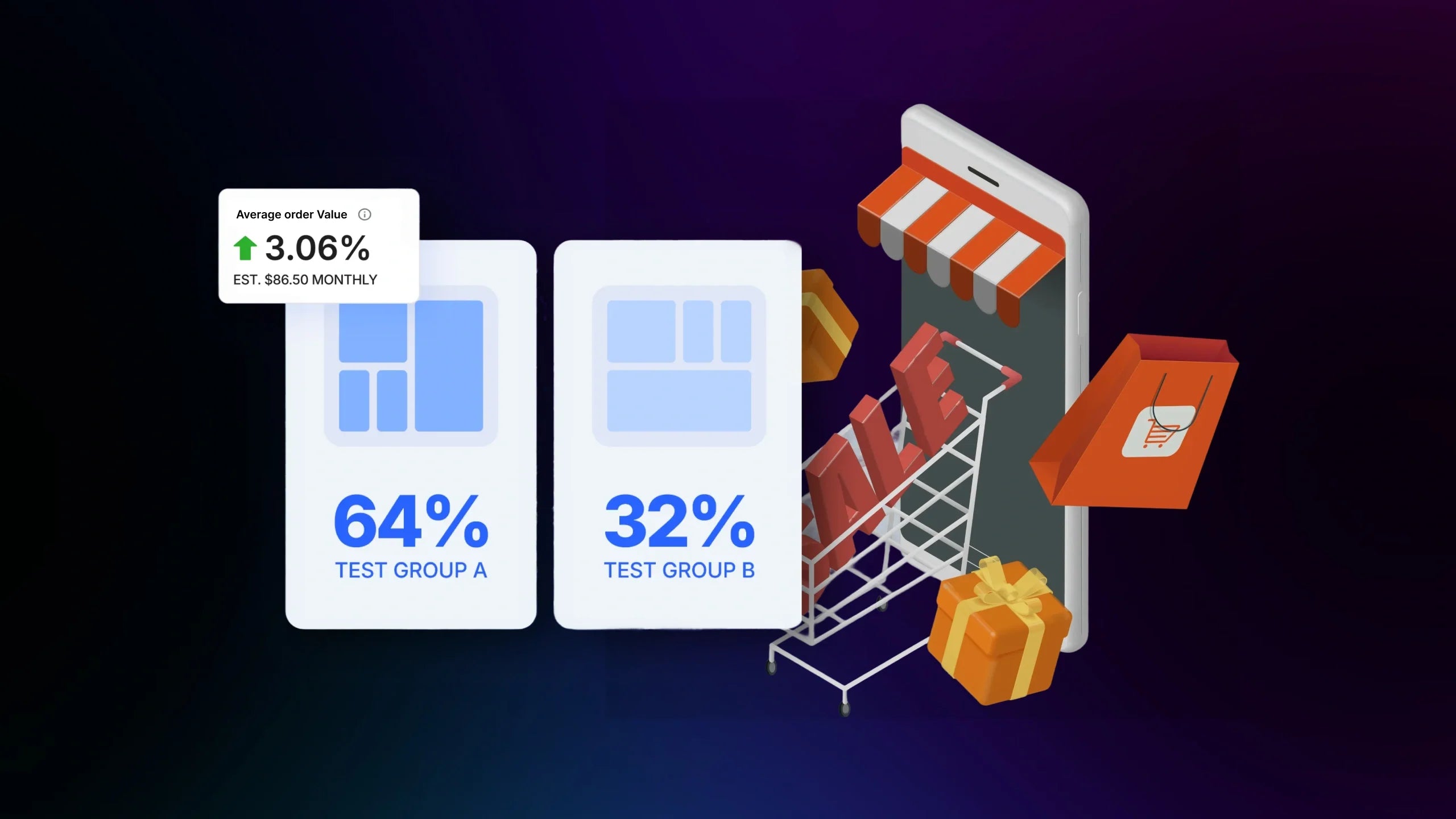
Offer testing is the process of experimenting with different commercial offers to understand which version drives stronger business outcomes. Instead of relying on assumptions or copying competitors, offer testing that uses real customer behavior to validate decisions around pricing, incentives, and product structure.
An offer is more than a discount.
It represents the full value exchange between your brand and the customer. When traffic quality, product, and messaging remain the same, changes to the offer often have a bigger impact on revenue and profitability than any visual or layout adjustment. That’s why offer testing is widely considered a profit-first form of experimentation.

A/B test offers focuses on profit, not just clicks.
At its core, every offer has two fundamental components: what you are selling and how you sell it. Offer testing evaluates these components in isolation or combination to reveal what customers are actually willing to buy, and at what price.

Offer Testing vs. UI Testing: Why the Difference Matters
Many teams mistakenly treat offer testing as another variation of UI or design testing. In reality, the two serve very different purposes. UI tests focus on improving interactions and engagement, while offer tests directly influence purchasing decisions and revenue mechanics.
This distinction becomes obvious when you look at the results. A button or layout change may slightly improve conversion rate, but a well-structured offer test can reshape key business metrics such as average order value, revenue per visitor, and profit per order. In some cases, an offer that converts less can still outperform others financially.

Source: TestFort
Common offer elements that brands typically test include:
-
Pricing levels: small increases or decreases
-
Discount mechanics: percentage versus fixed discounts
-
Product structure: bundles, packs, or quantity requirements
-
Incentives: free shipping or free gifts
-
Framing and urgency: limited-time versus evergreen offers
For brands running on Shopify, offer testing is especially effective because pricing rules and product structures can be adjusted quickly without redesigning the entire store. With experimentation tools like GemX and flexible page builders such as GemPages, teams can validate offer decisions using live traffic and real revenue data.
That’s why high-performing teams often treat offer testing as the foundation of their optimization strategy, long before they worry about fine-tuning UI details.
Why A/B Test Offer Should Be Your First Experiment
Many teams start optimization by chasing higher conversion rates. While conversion rate is easy to track, it doesn’t reflect how much value each sale actually creates. Offer testing shifts the focus from getting more buyers to earning more per buyer, which is why it should come before UI or layout experiments.
Conversion Rate Can be Misleading
A higher conversion rate does not always mean better performance. In fact, offer tests often reveal the opposite. Deep discounts tend to lift conversions but erode margins, while higher prices or bundles may convert slightly less yet generate more revenue overall. If you judge tests by conversion rate alone, it’s easy to scale an offer that quietly hurts profit.
That’s why offer testing works best when you prioritize metrics tied to revenue and margin, such as:
-
Revenue per visitor
-
Average order value (AOV)
-
Profit per order

Source: Shopify
These metrics show whether an offer truly improves business outcomes, not just clicks.
Offer Changes Are Fast to Test
Unlike major design changes, offer adjustments usually don’t require rebuilding pages. Pricing tweaks, bundles, and incentives can be tested quickly with minimal effort. This makes offer testing one of the fastest ways to generate meaningful insights early in an optimization program.
For stores on Shopify, this advantage is even clearer. With tools like GemX and flexible builders such as GemPages, teams can launch offer experiments on live traffic without slowing down design or development.
Offer Testing Creates Long-term Leverage
Every offer test produces insight, not just a winner. Over time, these learnings compound into a clear understanding of how customers respond to pricing, incentives, and product structure. Instead of guessing or copying competitors, you build a data-backed offer strategy that scales with your store.
This is why high-performing teams treat offer testing as the foundation of CRO, not a later-stage tactic.
Core Offer Variables You Should Test
Not all offer tests deliver the same level of impact. To avoid random experimentation, it’s important to focus on variables that directly influence how customers perceive value and make purchase decisions. Below are the core offer dimensions that consistently produce meaningful insights when tested correctly.
#1. Pricing Structure
Pricing structure defines how your product is packaged and sold, not just the number on the price tag. Small structural changes can dramatically affect perceived value and average order size, even when the base product stays the same.
Common pricing structure tests include:
-
Single product price vs. Bundle pricing
-
One-time purchase vs. Subscription or repeat delivery
-
High–low pricing (premium anchor vs. entry option)

High-low pricing is one of the most popular pricing structure that you can consider.
These tests help you understand whether customers prefer simplicity, flexibility, or perceived savings when choosing your offer.
#2. Discount Mechanics
Discount mechanics determine how savings are applied. Two offers with the same total discount value can perform very differently depending on how the discount is framed and triggered.
High-impact discount mechanics to test are:
-
Percentage discount vs. fixed amount
-
Threshold-based discounts (Spend X, Save Y)
-
Quantity discounts (Buy more, save more)
This category is especially useful for balancing conversion gains against margin protection.
#3. Incentives
Incentives add value without always lowering your price. In many cases, customers respond more positively to an added benefit than to a deeper discount, especially when the incentive feels exclusive or useful.
Common incentive tests include:
-
Free shipping
-
Free gift with purchase
-
Bonus product or add-on

Consider adding Free Shipping to test incentive without lowering your price.
Testing incentives helps identify which value signals resonate most with your audience while preserving profitability.
#4. Framing & Urgency
Sometimes the offer itself doesn’t change, only the way it’s presented. Framing and urgency influence perception and motivation, often unlocking gains without touching price or margins.
Effective framing and urgency variables to test include:
-
Limited-time offers vs. evergreen deals
-
“Because” messaging (e.g., stock up, save more, best value)
These tests reveal how much customer behavior is driven by logic versus psychology.
Where Offer Testing Delivers the Biggest Impact
To get meaningful results fast, you should prioritize touchpoints where customers are already close to a buying decision or forming price expectations. These are the areas where small offer changes can create an outsized impact on revenue.
Product Pages
Product pages are where intent is highest, and price sensitivity is most visible. Shoppers are actively evaluating value, comparing options, and deciding whether the offer feels “worth it.” This makes product pages one of the strongest starting points for offer testing.

A/B Test Offers on Your Product Page
High-impact product page offer tests include:
-
Bundle vs. Single product to increase perceived value and AOV
-
Quantity selector vs. Default quantity to encourage multi-item purchases
-
Price anchoring vs. Discount badges to shape how users perceive savings
Because product pages sit at the intersection of value, price, and intent, even subtle offer adjustments here can shift both conversion behavior and order size.
Cart & Checkout Stage
Once a shopper reaches the cart or checkout stage, the goal of offer testing shifts from persuasion to reassurance and value reinforcement. At this point, users are already inclined to buy, but hesitation around price or total cost can still cause drop-off.
Common high-performing offer tests at this stage include:
-
Cart-only incentives that reward commitment without site-wide discounting
-
Threshold offers, such as “Spend $X more to unlock a benefit”
-
Checkout upsells or add-ons that increase AOV with minimal friction
Testing offers here often produces a strong ROI because the traffic is highly qualified and changes directly affect completed orders.
Acquisition Touchpoints
Offer testing shouldn’t be limited to transactional pages. Early-stage touchpoints shape price expectations and influence whether visitors even enter your purchase funnel.
Key acquisition-focused offer tests include:
-
Email sign-up incentives, such as discounts vs. free shipping
-
Landing page hero offers that frame value immediately
-
First-purchase offers tailored to new visitors

Display your offer in the landing page hero for offer testing.
These tests help you understand which incentives attract high-quality leads rather than just more sign-ups.
For brands running on Shopify, combining offer testing across these touchpoints creates a cohesive value strategy instead of isolated promotions. With tools like GemX working alongside flexible builders such as GemPages, teams can validate how offers perform at each stage of the funnel using real traffic and revenue data.
A Practical Framework for A/B Test Offer (Profit-Focused)
Running offer tests without a clear framework often leads to misleading conclusions. To make offer testing truly profitable, you need a structured approach that prioritizes business impact over surface-level wins. The framework below keeps your experiments focused, interpretable, and scalable.
Step 1: Define a profit-driven hypothesis
Every offer test should start with a clear hypothesis tied to profit, not curiosity. A strong hypothesis explains what you’re changing, what you expect to happen, and why it should improve financial outcomes.
A simple hypothesis framework includes:
-
Observation: What problem or behavior you’ve identified
-
Change: What element you plan to modify
-
Expected result: What improvement you expect to see
You can consider this A/B Test Hypothesis by Erwan Derlyn as a template:

A/B Test Hypothesis template by Erwan Derlyn
For example, instead of testing a bundle “to see what happens,” you might test it because you believe customers value convenience and are willing to spend more per order when choices are simplified. This clarity prevents random testing and makes results easier to act on.
Step 2: Choose the right primary metric
One of the biggest mistakes in offer testing is defaulting to conversion rate. While conversion rate is a useful context, it rarely tells the full story when pricing and incentives are involved.
For profit-focused offer tests, primary metrics should reflect value creation, such as:
-
Revenue per visitor, to balance conversion and order size
-
Average order value (AOV), especially for bundles and upsells
-
Profit per order, when margin data is available

Revenue metrics you can track with GemX
GemX helps you track these metrics consistently across variations, making it easier to compare offers based on real business impact rather than surface performance.
Step 3: Control traffic and segmentation
Offer tests only work when traffic conditions are stable and comparable. Mixing audiences or running tests during noisy campaigns can distort results and lead to false winners.
To keep data clean, focus on:
-
Clear audience segments: New vs. Returning customers
-
High-intent traffic: Where offer differences actually matter
-
Stable periods: Avoiding major sales or external promotions

Clear your audience segments to keep data clean
This level of control ensures you’re measuring the offer itself, not external influences.
Step 4: Let the test reach significance
Ending an offer test early because one version “looks like it’s winning” is a common and costly mistake. Offer performance often fluctuates across days, devices, and buying cycles.
To avoid premature decisions:
-
Run tests long enough to cover a full purchase cycle
-
Wait for statistical confidence before declaring a winner
-
Extend tests when results are close instead of forcing conclusions
A disciplined approach here ensures that winning offers are truly better, not just lucky.
Common Offer Testing Mistakes That Kill Results
Offer testing can drive strong profit gains—but only when tests are designed and interpreted correctly. In practice, many Shopify stores run offer experiments yet struggle to scale results because of a few recurring mistakes.
-
Testing too many changes at once
Changing price, bundle structure, and incentives in a single test makes results hard to interpret. Even if one version wins, you won’t know why it worked, which limits repeatability and learning. Strong offer testing isolates one core variable so insights remain actionable.
-
Judging offers by conversion rate alone
Conversion rate is useful context, but it’s a poor primary metric for offer testing. Higher conversion often comes from deeper discounts, which can quietly reduce profit. Offer tests should be evaluated using revenue- or margin-based metrics to avoid scaling offers that look good but perform poorly financially.
-
Running tests during noisy periods
Peak sales events, heavy ad pushes, or seasonal campaigns can distort offer test results. During these periods, urgency and external messaging influence behavior more than the offer itself. Testing in stable conditions produces insights that are easier to reuse and scale.
-
Ending tests too early
Offer performance often fluctuates early on. Declaring winners before enough data is collected increases the risk of false positives. Letting tests reach sufficient confidence ensures decisions are based on patterns, not short-term variance.
-
Not documenting learnings
Treating offer tests as one-off experiments limits long-term value. Without documentation, teams repeat similar tests or rely on memory instead of data. Over time, this slows progress and weakens the offer strategy.
Real-World Offer Testing Patterns That Work
Not every winning offer needs to be complex. In practice, some of the most effective offer tests follow simple, repeatable patterns that consistently improve revenue without hurting margin. Below are proven approaches many high-performing stores use as starting points for offer testing.
1. Slightly raise prices on best-selling products
Best-sellers usually have strong product–market fit and lower price sensitivity than expected. Testing a small price increase on these products often reveals that conversion stays stable while profit per order increases.
This pattern is especially useful when margins are tight and traffic costs are rising. Even a modest price lift can compound into meaningful profit gains at scale.
2. Promote multi-packs instead of deeper discounts
Rather than discounting single items, many stores test pushing customers toward buying more units at once. Multi-packs increase average order value while keeping perceived savings intact.
Typical variations include:
-
Single item vs. 2-pack or 3-pack
-
Quantity discounts instead of flat price cuts

Test single item vs. 3-pack offer
This pattern works well for consumables, replenishable products, or items customers naturally “stock up” on.
3. Replace discounts with incentives
Discounts aren’t always the strongest motivator. In many cases, customers respond better to added value than reduced prices. Testing incentives allows you to preserve margin while still increasing perceived value.
Common incentive-based offer tests include:
-
Free shipping instead of a percentage discount
-
Free gift or bonus item instead of price reduction
This approach is particularly effective when customers are already close to buying but need a final push.
4. Use price anchoring to make bundles feel like a better deal
Price anchoring shapes perception without changing the core offer. By clearly showing the single-item price next to a bundle, the bundle feels more attractive, even if the discount is modest.
Anchoring tests often involve:
-
Highlighting “Compare at” prices
-
Visually positioning bundles as the best-value option
This pattern helps guide customers toward higher-value purchases with minimal friction.
How GemX Helps You Run High-Impact Offer Testing on Shopify
GemX is built to support offer testing where it matters most: decision-making, not guesswork. Instead of relying on assumptions, teams can validate offer performance using real traffic and real revenue data.
How GemX fits into an offer testing workflow:

-
Test offers on live traffic: Run pricing, bundle, or incentive tests directly on real users to reflect actual buying behavior.
-
Clean traffic splits & audience control: Split traffic reliably and apply segmentation (new vs. returning, device, source) so offer results aren’t mixed or distorted.
-
Profit-focused measurement: Evaluate offers using metrics beyond conversion rate, such as Average order value (AOV), Revenue per visitor, and Funnel-level performance.
-
Avoid false winners: By tracking downstream impact, GemX helps teams avoid scaling offers that convert well but reduce profitability.
-
Works with flexible page builders: GemX integrates smoothly with tools like GemPages, allowing teams to test both the offer logic and its presentation without introducing visual noise.
GemX acts as a validation layer for offer decisions, so you can understand which offers actually drive sustainable revenue growth, not just short-term conversion spikes.
Final Words
Offer testing helps eCommerce teams move beyond assumptions and make decisions based on how customers actually respond to pricing, bundles, and incentives. By treating offer testing as a core part of your optimization strategy, you build a clearer understanding of what drives real value for your business.
If you want to keep improving how you test and validate offers, exploring practical experimentation resources from GemX is a natural next step.
FAQs about Offer Testing


